
Cary #1 for Retirement in NC
Monday I was notified that Cary was ranked as the best place to retire in North Carolina by Motley Fool. Here is what they said about Cary:
“Cary has more than 150,000 people and boasts a remarkably low crime rate. It’s located just 11 miles from the Research Triangle and includes 20 of the best hospitals in the state within 25 miles of its downtown. The only downside to Cary is that the median home sales price in October 2023 was $567,500, according to Redfin data. Still, if you’re relocating from an area with a higher cost of living to make the most of your retirement plans, choosing a smaller home in Cary may still keep you well within budget.”
Manager One-On-One
Monday afternoon I met with the town manager for about half an hour. Our topics of conversation included budgeted funds for historic preservation, the timeline of the multi-modal center, and the Waverly Place rezoning.
Cary Tennis Classic Board
Monday night I met with the Cary Tennis Classic Board. We talked mostly about activities that will be going on prior to the tournament and the week of the tournament. It will be Cary’s first professional tournament with both men’s and women’s events.
Diwali Dance Practice

Tuesday evening I joined council members and several staff members for the first practice of a Diwali dance that we will perform in October. We will be practicing weekly until that time. The Cary team will have at least 17 dancers this year.
Human Relations, Inclusion, & Diversity Task Force
Wednesday evening I participated in a meeting of the Human Relations, Inclusion, & Diversity Task Force.
The first topic was details about becoming a permanent board. The town clerk explained the process of becoming a permanent advisory board and how to apply for this board. She also explained the policies and procedures for a permanent board. An advisory board year runs from October to the following September.
The board next discussed demographics that should be included for town surveys, how it should be asked, how that information is used, and what is stored and why.
Next the board debriefed on Pride month. Overall, they thought it was a success and look forward to doing more next year.
Their final topic of discussion was a review of their priorities as a permanent advisory board.
NC Metro Mayors
Friday I attended a meeting of the North Carolina Metro Mayors. In this meeting we heard the wrap up of the NC General Assembly’s regular business for 2024. Here is the summary from the Executive Director:
Community/Economic Development
Regulatory Reform Act of 2024 S607
- One section of this bill allows cities to continue to score development projects for the provision of water and sewage but restricts the specific things that you can measure in the scoring (not allowing architecturally related measures for example).
- Requires cities to compensate owners for the removal of onsite signage. Fairly limited impact.
2024 Building Code Regulatory Reform S166
- SB 166 passed and was vetoed by Governor Cooper. His veto cited changes to building codes “limiting options for energy efficiency and electric vehicles” and the removal of “subject matter experts,” (including local government officials) from the building code council. A veto override appears likely, timing dependent on whether the majority is able to muster their members to planned sessions this summer and fall.
- The backflow provision was negotiated and now includes our negotiated language changes and three provisions we are not 100% satisfied with.
- One of these provisions restricts the ability to perform annual checks on residential irrigation systems that do not have fertilizer attached to them. The provision now requires these checks to occur once every three years.
- Lengthy bill (70 pages) – Other provisions of interest to our cities (Derrick’s notes):
- Section 1.1: Prohibits a local government from requiring an existing customer to install a backflow preventer unless a hazard determination is made by the utility or the state.
- Section 1.4: Requires local governments to perform initial residential building plan review concurrently with other state, federal, and local development review processes. This section also imposes a refund for a portion of permit application fees for building permits not initially reviewed within 20 business days, a change from the bill’s original version which imposed the refunds after 15 days.
- Section 1.5: Clarifies a local government may not withhold a building permit or certificate of occupancy for development improvements not yet completed, unless determined to be a public safety issue. The section also clarifies that public safety issues do not include landscaping or street lighting.
- Section 1.8: Prohibits local governments from requiring curb and gutter design standards beyond those adopted by NC DOT for subdivision roads.
- Section 1.9: Prohibits cities from requiring a developer to construct sidewalks for small residential subdivisions located in municipal ETJ, unless the city accepts long-term maintenance of the pedestrian facilities.
- Section 1.12: Requires local governments to conduct an inspection of improvements subject to a performance guarantee within 30 days of a request. If the local government and developer disagree whether the improvements meet local specifications, a developer may obtain a certification under an engineer’s seal attesting the improvement meets the local specifications.
- Section 2.1: Prohibits a local government from adopting local fire prevention code standards beyond those required by the Residential Code.
- Section 3.4: Establishes the Building Code Permit Technician Certification program for local permit techs.
- Section 3.6: Clarifies that local government officials shall not make administrative decisions on the scope of work covered by architect or engineer seals of design affixed to plans.
- Section 4.48: Clarifies that, for the purposes of local stormwater programs, artificial turf is not considered a built-upon area.
- Section 4.9: Prohibits public water and sewer systems from imposing unauthorized conditions for residential development. Those conditions, often negotiated during the conditional rezoning process, could not be imposed through utility development agreements. Another provision restricts local governments from using unauthorized conditions as metrics for a scoring or preference system to allocate water and sewer among residential development applicants.
C-PACE Program S802
- The CPACE bill (commercial property assessed clean energy) we discussed earlier this session was signed into law. The portion Nelson was working on relates to the financing capacity for certain qualifying upgrades of commercial properties such as new windows, wiring, lighting, insulation, and solar for resiliency purposes. U.S. Dept of Energy info – energy.gov/financing-cpace
- Once a toolkit is developed by the NC Department of Commerce, local municipalities will have the option to adopt regulations that permits CPACE-financed assessments to occur in their jurisdiction. A developer looking to redevelop using CPACE must submit to the local government and must be signed off by the county as well.
- This program is expected to be implemented in 4-8 months.
- There has been success with this, especially with hotels that need upgrades. This can positively impact travel and tourism.
- Talk to your city’s sustainability directors about this program as a possible tool for upgraded energy efficiency programs.
Didn’t Pass:
PFAS Pollution and Polluter Liability H864
- This bill did not move beyond one committee hearing.
- While the bill did not move beyond a committee hearing, it did represent a strong indication that legislators are now starting to understand the urgency and costs associated with removing PFAS from our municipal water systems and the environment.
- Given new EPA requirements and the rising costs and concerns in our municipal water systems for PFAS, it is IMPORTANT to speak with Legislators about the cost burden placed on water system ratepayers to remove PFAS from water.
- The NC Secretary of Environmental Quality remains very interested in taking tours of public works facilities to learn about the costs of removing PFAS from water systems. For cities and water authorities that are currently making – or contemplating – significant investments in managing PFAS in your water system, consider reaching out to NCDEQ so they can come and learn about your strategies.
- The Environmental Management Commission proposed new rules around the regulation of PFAS-related materials to be considered at their September meeting.
Suggested article:
Members of the commission charged with adopting rules to protect the state’s air and water resources voted this week to pursue health-based standards for only three PFAS materials prevalent in North Carolina drinking water sources. The Environmental Management Commission’s groundwater and waste management committee Wednesday afternoon declined to recommend to the full commission all eight per- and polyfluoroalkyl substances included in proposed rules set forth by the North Carolina Department of Environmental Quality, or DEQ. The commission’s water quality committee also voted Wednesday to defer a motion to send the surface water rule package on all eight PFAS to the commission for action in its full meeting on Thursday.
Read more at Coastal Review, https://coastalreview.org/2024/07/commission-members-balk-on-5-proposed- pfas-standards/
County Tier Designation Study Bill H1044
This study bill did not advance, but the hearing in State Government Committee indicated growing frustration with the current tier designation system. Share this with your local economic developers and prepare to discuss your perspective with legislators in the future.
Local Revenues/Local Control
REMINDER: Local bills opposed to statewide legislation, are not subject to signature or veto by the Governor. It appears that controversial local bills are a growing trend, often addressing local government policies and issues. Further evidence that time spent sharing your work and goals with local and regional state legislators is increasingly important.
Various Local Provisions III H1064 (includes Forsyth partisan municipal elections)
- Passed to make ALL municipal elections partisan in Forsyth County.
Various Local Provisions I H909 (Summerfield and Kings Mountain)
- This bill de-annexed a large portion of land in the town of Summerfield in Guilford County to accommodate a large development that the town had rejected.
- This bill also restricted City of Kings Mountain ETJ to only one mile.
Didn’t Pass
Various Election Changes S88
- This bill began as a state-wide election changes bill, but during the last week of session, they added a provision that would have impacted cities and how elections are handled.
- This bill would have restricted local election changes until a new national census is conducted. The restrictions on local governments prevent councils from making changes on a variety of representation and election issues, including:
- number of council members, mode of election, partisan nature and process for selection of mayors.
- This bill passed the Senate on a partisan basis but did not get a hearing in the House. It could resurface again in the future.
Transportation
DOT Legislative Changes H198
- Not many of the bills that were passed this session specifically impacted transportation.
- A section of this H198 includes removing vegetation around billboards.
- The Governor vetoed this bill because of the language about removing vegetation around billboards.
- His veto was overridden by the legislature.
Public Safety
Various Criminal and Election Law Changes H237 – Mask bill
- Partially motivated by mask wearing protestors on college campuses, this bill passed in the Senate returned to a pre-COVID ban on wearing masks in public. After a debate regarding public health concerns, a small group of Republican members in the House refused to support it. This led to amendments that allow for the wearing of medical grade masks in public.
- The bill includes enhanced penalties for committing crimes while wearing a mask.
- Includes an unrelated section on campaign finance.
- Governor Cooper vetoed the bill, which was subsequently overridden by the Republican majority in both chambers.
Insurance Rev/Online/Firefighters S319
- This bill modified the legislation from 2021 state support for cancer insurance for firefighters. It DOES NOT CHANGE the support for firefighters – in fact makes this program PERMANENT and shifts it from a purchased private insurance to a state supported program with third-party administrators for state insurance (previously a state purchased private policy for impacted firefighters, now funded directly by the state).
Didn’t Pass
Require Sheriffs to Cooperate with ICE H10
- Both chambers passed the bill, but they did not concur with changes in the House.
- This could be a bill the legislature might take up before the end of the year.
Nonconsensual Booting and Towing Reform H1024
- This bill would regulate towing practices in North Carolina. It did not make it past committee hearings this year.
- If you like this bill, then mention it to your members.
- It is a complex bill, but these changes could help our cities by providing a state-wide framework for the towing industry.
Removal of Squatters from Private Property H984
- This bill was designed to provide an additional framework to speed up removing squatters from private property. While this topic is more prevalent in larger cities in other states, several NC cities report a growing trend for squatting in their jurisdictions. We suggest reviewing this with your local law enforcement, because we expect this legislation to pop up again next year.
Town Manager’s Report
Sean’s Message

As shared in the June 28 Council Weekly Report, the tower crane for the new Cedar Street Parking Deck was erected on schedule this week. This 130-foot tall and 180-foot-long crane will be crucial for unloading and hoisting materials, assisting with concrete pours, and lifting steel and concrete panels. Due to the required location and size, the crane will occasionally span over surrounding areas, including E. Chatham Street and adjacent buildings. When not in use, the crane will act like a weathervane, slowly rotating to match the wind direction and minimize wind loads on the crane arm. Now that it is operational, the crane will receive deliveries from E. Chatham Street in the early morning for the next several months.
While this project continues to make progress here in Cary, I look forward to attending and seeing several of you at the Chamber’s Leadership Conference next week.
Have a great weekend.
Sean
Independence Day Celebrations
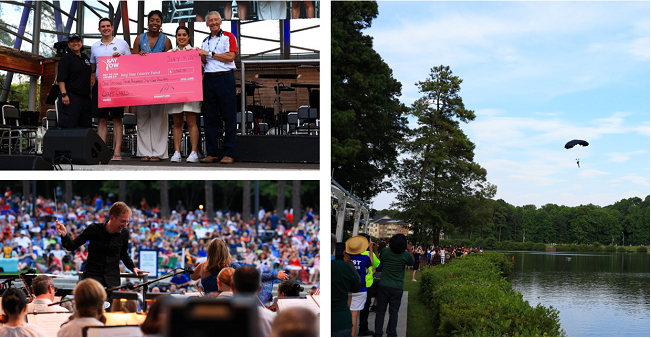
Koka Booth Amphitheatre once again served as the hub for Cary’s July 4th celebrations. Mayor Weinbrecht kicked off the festivities and the fireworks display. One of the day’s highlights was a US Veterans Corps rescue demonstration. This thrilling display captivated attendees as they watched demonstrators jump from a helicopter and parachute from a plane into Symphony Lake, followed by an impressive rescue operation using motorized rubber rafts.
Additional celebrations for the holiday took place around Cary on the 3rd and 4th. The Cary Town Band’s performance at the Cary Arts Center delighted attendees with classic tunes. Meanwhile, across the street, Downtown Cary Park’s patriotic celebration featured a showing of National Treasure and a variety of other red, white, and blue activities.
On the morning of the 4th, the fishing tournament at Bond Park once again drew many families in search of the smallest and largest catch of the day. Overall, Cary’s Independence Day events showcased the community’s unity, providing joy, excitement, and memorable experiences for all.
Walnut Street Road Diet Update
As part of our ongoing efforts to design and plan for the upcoming Walnut Street Road Diet project, surveys have identified some routine maintenance needed on underperforming sections of the sewer and stormwater systems.
In preparation for the road diet restriping activities, Public Works crews will begin upgrading these sections starting next week. This work is expected to last 2-3 weeks. During this period, at least one travel lane will remain open in each direction.
The road diet project is expected to begin construction later this summer. Additional information can be found on our project website.
Fitch Affirmed Cary’s “AAA” Rating, Stable Outlook
On July 1, Fitch affirmed Cary’s ‘AAA’ rating on Cary’s outstanding General Obligation bonds with a stable outlook. Fitch identified numerous credit strengths including Cary’s financial resilience with ‘high’ revenue and expenditure control resulting in ‘ample’ budgetary flexibility. Fitch also underscored Cary’s strong demographic characteristics highlighting the strength of Cary’s economic level indicators (unemployment rate, education attainment, median household income), strong local commercial and economic bases, as well as proximity to Research Triangle Park and local colleges and universities. Cary maintains ‘AAA’ ratings from all three leading rating agencies: the best possible rating for a local government.
FirstHealth Begins EMS Service in Cary Chatham County
Starting at noon on Monday, Chatham County began providing primary EMS coverage for the Cary area within Chatham. This service is provided by the county’s contracted agency, FirstHealth EMS. The ambulance, housed at Station 8, also referred to as Chatham EMS Station 6, is staffed by two-person medical crew 24 hours a day. So far, the call volume has been very low, with Cary 911 reporting no operational impacts.
North Cary Water Reclamation Facility Marks 40 Years
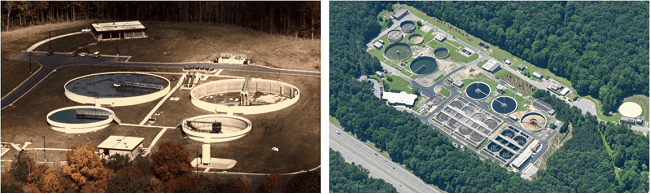
On July 1, 1984, the North Cary Water Reclamation Facility (NCWRF) opened its doors, marking a significant milestone in Cary’s journey towards utility independence and environmental sustainability. Originally rated for 4 million gallons per day (MGD), the NCWRF quickly became essential to Cary’s future. The facility was upgraded to 10 MGD in 1995 and then to 12 MGD in 2005, ensuring we could support our growing population. One of the facility’s proudest achievements came in 2001 when we became North Carolina’s first permitted reclaimed water distribution system. This achievement was a testament to our commitment to environmental stewardship and innovative water management practices. As we celebrate 40 years of service, we reflect on the dedication and hard work that has made the NCWRF a model of excellence and a trusted steward of our community’s resources.
Howland Avenue Repaving
Next week, weather dependent, crews will repave Howland Avenue and Magnolia Drive. Work is expected to be complete by July 19. Crews will return to the area in the coming weeks following initial work to repave other streets in the same vicinity. This work is done as part of our larger Street Improvements Project. For more information, including all repaving locations, visit our website.
2024 Standard Specifications and Details Update
Cary’s Standard Specifications and Details Manual was amended on July 1, 2024. The Manual is a valuable resource throughout the organization and the development community. Developers, designers, contractors and vendors routinely depend on our specifications and details to plan and complete their work. The updates fall into three general categories: (1) administrative (renaming and renumbering details and specifications, clarifying requirements, etc.), (2) those required to remain consistent with an outside organization (a change in a law, provision or policy within Cary or from an outside agency), and (3) desired changes to keep Cary great (adding pedestrian crossing requirements, new signalized intersection requirements, soil cell specifications, etc.). The updates and changes will allow all parties to work together more effectively and achieve better results with future developments. The updated Manual is available for reference on Cary’s website at carync.gov/specs.
Wake County JIS Steering Committee Kicks Off in Cary
Communicating accurate and timely information to the public in an emergency is a staff priority. Earlier this year, Wake County Emergency Management approached agencies within the county about the concept of building a virtual Joint Information System (JIS). Garnering support from public safety leaders and city/town managers, Wake County has assembled a steering committee with communications staff from Apex, Cary, Holly Springs, Raleigh, Raleigh PD, Wake County, Wake County Sheriff’s Office, Wendell and Zebulon. The first meeting was held in June at Downtown Cary Park, where the group set goals for its planning and implementation. Several small group meetings are scheduled for the coming weeks and the larger group will reconvene later this summer. The first iteration of a virtual JIS is expected to pilot this fall in support of election season.
Maynard Tank Class of 2025

Having closed the books on another successful graduation season, the Maynard Road water storage tank now stands ready to welcome the senior class of 2025. On July 5, contractors climbed 138 feet to the catwalk and completed the 2025 update. Cary celebrates the hopes, dreams, and achievements of Cary’s high school seniors through this much-loved tradition.
Upcoming Meetings
Athletic Committee
Monday, July 15
6:00 p.m.
Environmental Advisory Board
Tuesday, July 16
6:00 p.m.
Public Art Advisory Board
Wednesday, July 17
6:15 p.m.
Mayor’s Mailbox
- Two complaints about Cary’s tax rate.
- A complaint about rezoning proposal 21-REZ-16 off Old Apex Road.
- A complaint about rezoning proposal 24-REZ-06 in the Regency Park area.
- A complaint about panhandling.
- Praise for our animal control officers.
Next Week
Next week’s activities include staff meetings, an interview about Cary’s evolution, Diwali dance practice, the Cary Chamber Leadership Conference, and a meeting of the North Carolina Metro Mayors.
Well, that is all for this week. My next post will be on Sunday, July 21st, 2024. Although I have Facebook and Twitter accounts those are not the best means of communication with me. Please send all Town of Cary questions or comments to Harold.Weinbrecht@townofcary.org and email personal comments to augustanat@mindspring.com.
 Harold's Blog