
Purpose of this Blog
It is my hope that this blog will provide insight not only into who I am meeting with on behalf of the Town, but also the topics we discuss. I believe strongly in open and transparent government. This blog is one of several initiatives I implemented when I became mayor in 2007 to make the governmental process more accessible to our citizens.
This blog is written with sincerity, honesty, and a commitment to accuracy so our constituents can better understand the work we do. After all, we work for them!
Meeting With State Auditor’s Office
Monday, I met with the State Auditor’s team, including State Auditor Dave Boliek. We spent more than two and a half hours discussing a variety of topics related to Cary’s organizational culture and operational practices. I learned a great deal during the meeting, including information about practices that predate Manager Stegall’s tenure. For example, they shared details regarding procurement card procedures that I had not previously been aware of.
The team also raised questions about several expenditures that the council knew existed, though we were not aware of the full amounts involved. One thing is certain: this council is committed to identifying questionable practices, improving transparency, and putting stronger safeguards in place. While there is still much work ahead, I am confident that, in the end, our system of checks and balances will become one of the strongest, if not the strongest, in the nation.
We should get a report from the State Auditor within the next two to three weeks.
Cary Tennis Classic Board
Monday night, I joined a meeting of the Cary Tennis Classic Board to discuss preparations for this year’s tournament, which will take place June 28 through July 5. Our conversation covered a variety of topics, including sponsors, the match schedule, skyboxes, hospitality, community events, and the Mayor’s Cup.
The Cary Tennis Classic is shaping up to be another exciting event for our community, and this year’s tournament should be a blast. I hope you’ll plan to attend!
Jordan Lake Watershed
Tuesday afternoon, I met with a resident who is advocating for the protection of the Jordan Lake Watershed. She expressed particular concern about the density proposed in a rezoning application and its potential impact on this environmentally sensitive area. She was seeking guidance on who to contact in order to help educate others about the importance and sensitivity of the watershed. Assistant Town Manager Berry and I were able to provide information, resources, and recommendations to assist her in her efforts.
Honor a Teacher Award
Tuesday evening, I joined council members Craig, Bansal, Richards, and Huang at the Cary Chamber’s Honor a Teacher event. Approximately 600 teachers, business owners, and community members attended the celebration. Remarks were shared by Council Member Craig, a teacher, and NC Senator Adcock, who previously served as Cary’s Mayor Pro-Tem.
Each school with Cary students was recognized with five teacher nominees. From those nominees, one teacher from each school was selected to receive a plaque and a $1,200 award. One special condition accompanied the award: the funds could not be spent on classroom expenses. Cary sponsored two of the awards, and I was honored to join fellow council members in presenting them to the winners from Adams Elementary and White Oak Elementary.
As each teacher came forward to receive their award, their educational background and accomplishments were shared with the audience. I was truly impressed by how many held master’s degrees and by the dedication they have shown to their profession. We are incredibly fortunate to have such outstanding teachers serving our local schools. Bless each and every one of them!
Citizen Survey Results
Cary Biennial was completed recently, and government services received the highest rating since the survey began. Here is the press release:
In the history of Cary’s Biennial Resident Satisfaction Survey, residents this year awarded Cary’s government operations their highest scores yet, with none of the seven common service dimensions falling below an A rating. The survey gave a group of Cary residents the opportunity to rate their government and community on 30 core questions, covering topics like safety, appearance, Town employee customer service, and quality of life. The Town uses this scientific poll to help provide guidance on where it might make changes to enhance Cary residents’ quality of life.
Specifically, the service dimensions were rated as follows:
| Service Dimension | Rating |
| Courteous | A |
| Professionalism | A |
| Fairness | A- |
| Helpful | A- |
| Quality of Customer Service | A- |
| Promptness of Responses | A- |
| Knowledgeable | A- |
“This survey report gives us a clear look at what matters most to our residents and how we’re doing. It’s good to see strong ratings across our services and quality of life. We also hear the concerns about transportation and housing, and that work continues. The timing lines up well as we move forward with the next budget and keep focus on what our community expects from us,” said Interim Town Manager Russ Overton.
The 2026 survey also reveals:
- The Cary Police Department earned impressive ratings with a level of improvement from 2024, with no grade falling below A-.
- The Cary Fire Department continues to earn excellent ratings for all service dimensions (A+) with the exception of Courteous (A).
- The Parks, Recreation & Cultural Resources Department earned a notable degree of improvement from 2024 with the highest rated service dimension being Welcoming.
- 98.8% have a positive perception of safety in Cary, including in public places.
- 97.8% are satisfied with opportunities Cary offers to participate in the decision-making process.
- The most important issues identified by Cary residents are growth, transportation, and affordable housing.
- 31.4% of respondents are comfortable with Cary using artificial intelligence, such as ChatGPT, in its communications with residents.
- Respondents trust Cary government, with a mean of 6.46 out of 9, more than county (5.92), North Carolina (5.26), and federal government (3.86).
This is the 15th consecutive time Cary has conducted its biennial survey, which started in 1998. This year, a total of 400 Cary residents were randomly selected for the survey and interviewed by telephone (listed, unlisted, and mobile phone numbers) from January 12 to February 27. Just like Gallop, Nielsen, and other international pollsters, consultants for Cary utilized scientifically developed sampling techniques and statistical analysis that allow the survey results to be generalized over the entire population even though not everyone in Cary is called. The margin of error for this survey was +/- 4.89%.
Cary contracted with BKL Research of Salem, VA to conduct the study (survey and report) at a cost of $44,500. Representatives from BKL will present the findings at the May 14, 2026, quarterly meeting of Town Council and staff.
Find the full survey and report at carync.gov/research
Quarterly Meeting
Thursday the council held a quarterly meeting to discuss the 2026 Biennial Resident Survey Results, the 2026 Employee Survey Results, the FY2026 Q3 Financial Update, and the FY2027 Manager’s Recommended Operating and Capital Budget. The following are my notes from each of the sessions:
2026 Biennial Resident Survey Results (Scale 1 to 10)
The 2026 Cary Biennial Resident Satisfaction Survey revealed the highest government service ratings in 26 years. Conducted by BKL Research, the scientific poll of 400 randomly selected residents highlighted overwhelming satisfaction, trust in local leadership, and areas for future community focus.
- 48 of 60 80% means increased this year
- 23 means were the highest earned to date
- 27 grades improved, 25 were unchanged, and 4 declined
- Overall average for 33 service dimensions was 8.41 (A-)
- Trust in Government to do the right thing for Cary residents: Town of Cary 6.46. County 5.92, NC 5.26, and Federal 3.86
- Cary Overall as a place to live: 2026 8.24, 2024 8.24, 2022 8.28, 2020 8.30, 2018 8.15, and 2016 8.11
- Cary Quality of Life: 2026 3.32, 2024 3.58, 2022 N/A, 2020 3.38, 2018 3.21, and 2016 3.16
- Most Important Issues Facing Cary: Growth 92, Traffic 68, Affordable housing 54, Cost of living 47, …
- How Safe residents feel: 2026 8.39 (highest ever), 2024 8.10, 2022 8.25, 2020 8.35, 2018 8.22, and 2016 8.06
2026 Employee Survey Results
This was the first employee engagement effort in over 10 years. We partnered with an external firm, CRA, with expertise in this area. There was strong participation from employees, resulting in actionable areas for improvement.
- Restore accountability and trustworthy communication from leadership (29%)
- Address compensation and pay equity (26%)
- Increase staffing levels (23%)
- Improve career development and advancement (16%)
- Be more transparent, authentic, and honest (26%)
- Consolidate channels and reduce communication volume (18%)
- Communicate updates and responses in a timelier manner (13%)
- Enable more two-way communication and feedback (12%)
- Ensure clear, consistent messaging across levels and departments (11%)
- Trust, listen to, and empower employees (34%)
- Increase transparency and honest communication (29%)
- Improve accountability and fairness (27%)
- Increase leader visibility and dialogue (16%)
FY2026 Q3 Financial Update
I financial update was given that covered the third quarter of fiscal year 2026 which is from January through March. Here are some of the notes:
- General Fund revenues and Utility Fund revenues outperform expenditures, strengthening year-end projections.
- Sales tax collections continue to show positive growth, while property tax revenues are projected to moderate primarily due to a variety of factors.
- Our annual third-party auditor express their opinion that the statements are free from material misstatement and in compliance with GAAP. They are not an opinion on the strength of financial position. They cover the basic financial statements. Additional fees would be required for them to review policy statements such as fund balance. Cary will need to choose an auditor since the three-year contract of the current auditor expires.
- The external auditor review process has resulted in two finalists: Cherry Bekaert and Mauldin & Jenkins
FY2027 Manager’s Recommended Operating and Capital Budget
The process for this year’s budget began with directors collaboratively developing a recommended budget and presenting it to the Interim Town Manager. The Interim Town Manager then conducted Budget Preview meetings with Council. From March through May (compared to May through June last year), directors shared preliminary budget insights and facilitated priority discussions with all Boards and Commissions. Public input reports were provided to Council at each work session, and capital project work sessions were held in March.
Several new practices were implemented as part of this year’s budget process. All work sessions and meetings were livestreamed and recorded to increase transparency and accessibility. The concept of quadratic voting, a Government Finance Officers Association best practice, was introduced during the Council-Staff Retreat in February. This exercise, along with Council discussions, helped establish the framework for budget development by directors and management. From March through May, management and Council discussed budget items during up to three 4-hour meetings. In addition, a Budget Open House was held in April and was also livestreamed and recorded.
The priorities set by council in order include community safety, new capital investment, high performing staff, affordability, maintaining service levels, maintaining facilities, fiscal responsibility, environmental stewardship, service excellence, and operational efficiency. The top three priorities for boards and commissions were public safety, maintaining facilities, and maintaining service levels. The top three priorities from community sessions were public safety, fiscal responsibility, and maintaining service levels.
Recommended budget:
- $573.5 million, $445.9 million in operations, and $127.6 million in capital
- Property tax rate: 37.75 cents 3.75 cents increase. About $20 per month increase for median value home of $650,000.
- Solid waste and recycling fees increase by $2/month. Utility rate increase of 4% overall increase applied to base rate only which is about $3.08 per month increase for typical household.
- Cary grew by 26,000 people in the last 10 years without any new police officers.
- 89 new police positions are needed across all divisions department wide.
- This year will add 21 officers with required supervisors and 6 911 call center officers. This will be needed for two more years after this year.
- The need is 1.5 officers per 1000 residents. There will be additional space needs.
- The goal is to get response times down to 12:07 minutes.
- In 2 to 3 years two new fire stations in western Cary will be coming online and additional personnel will be needed.
- In 3 to 6 years, one new fire station will be needed in southeastern Cary with ladder truck and personnel.
- Cary averages 6.8 miles of coverage per station which is greater than Winston-Salem, Durham, Raleigh, Greensboro, Chapel Hill, High Point, Apex, Wake Forest, Garner, and Asheville.
- New Capital projects include Carpenter Fire Station Widening at $42.4 million, new sidewalks at $3.7 million, GoCary Downtown Multi-Model Center (primarily funded with Wake Transit Plan dollars).
- Floodplain and Open Space acquisition at $6.3 million.
- 54% of the recommended budget supports maintaining Cary’s infrastructure.
- A total of 55 new positions is recommended: 33 public safety positions and 22 non-public safety positions.
Since the time expired before the council could review the entire recommended budget the council will continue at our next work session.
Downtown Cary Park Tree Assessment
This week the council received an assessment of the trees in Downtown Cary Park. Unfortunately, it was not good news. Here is the executive summary from that assessment:
“Trees in Downtown Cary Park are priority trees, however the mature trees existing on the property prior to the establishment of the park are the highest priority. This document mainly focuses on the condition and management needs of the 38 existing mature trees within the park. The management needs of the newly planted trees are not covered in this document, with the exception of the 5 nuttall oaks planted within the elevated pavers of the Academy Plaza management area.
Site condition changes that occurred during park development changed the hydrology of the site, changed the soil grade in some areas, and disturbed the root system of the mature trees. Cary staff arborists have been inspecting the mature trees annually, with the last inspection taking place in October of 2025. Soil treatments for root invigoration have taken place annually to counter soil disturbance during construction. Some trees have continued to decline. The ‘Next Steps’ section below summarized staff arborists recommendations to mitigate the tree risk. The ‘Background and Discussion’ section give more details on the individual trees and management areas.
Key Point and Next Steps
To mitigate the tree risk, the arborists recommend:
Immediate (Spring 2026)
- Removal of the 24-inch pecan tree in Gathering House management area, replace with weeping willow or bald cypress.
- Prune deadwood out of 31-inch pecan in Gathering House management area. Assess tree every 6 months.
- Prue and retrench willow oaks in the Nest management area.
- Remove 1 nuttall oak from Academy Plaza.
Near Term (6 month to 2 years)
- Maintain care on the 35-inch willow oak in Botanical Garden South management area. The willow oak would need to be pruned to reduce the deadwood in the canopy to mitigate limb falls. Additionally, the willow oak be inspected by staff arborists every 6 months and after major storm events for any change in condition or health.
- Continue with retrenchment pruning of willow oaks in the Next management area. Anticipate tree removal occurring in 1-3 years.
- Remove 4 remaining nuttall oaks in Academy Plaza management area and close planting holes. Provide artificial shade for the summer months.
Long Term
- Continue with root invigoration treatments for a minimum of 2 additional years.
- Assess all existing mature trees at least annually
…
The report continues with a complete audit of the mature trees with life expectancies provided.
Council Out and About
This week, I was honored to join community members and local organizations at events that reflect the values that make Cary such a special place. From recognizing Huntington’s Disease Awareness Month to celebrating cultural exchange, supporting compassionate care, welcoming new business investment, and promoting environmental stewardship, these moments highlight the strength, diversity, and spirit of our community.
As we are currently in the depths of budget season, I encourage all residents to get involved: listen in, attend meetings, and share your thoughts with us at the first budget hearing on May 28. Your input helps shape the priorities and investments that guide Cary’s future.
Harold Weinbrecht
Cary Mayor
Huntington’s Disease Awareness
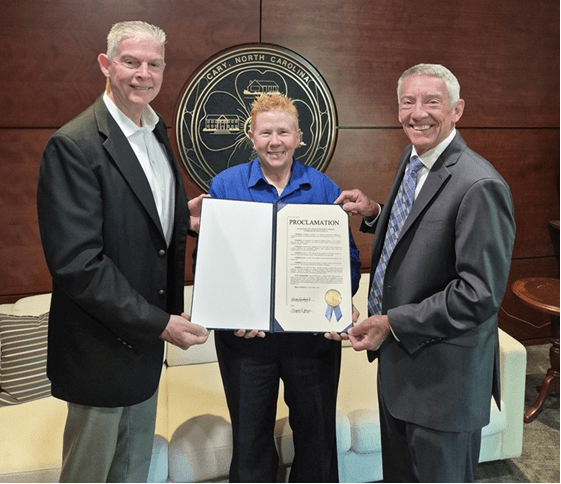
Mayor Harold Weinbrecht presented a proclamation declaring May as Huntington’s Disease Awareness Month to Betsey McFarland, Executive Director of Huntington’s Disease Reach, headquartered in Cary. Huntington’s disease is a hereditary brain disorder that affects movement, cognition, and behavior.
Sister Cities Student Farewell Dinner
Mayor Harold Weinbrecht and Councilmember Michelle Craig attended the Cary Sister Cities French Student Farewell Dinner. The event celebrated cultural exchange and recognized French students who were visiting Cary.
Transitions Lifecare
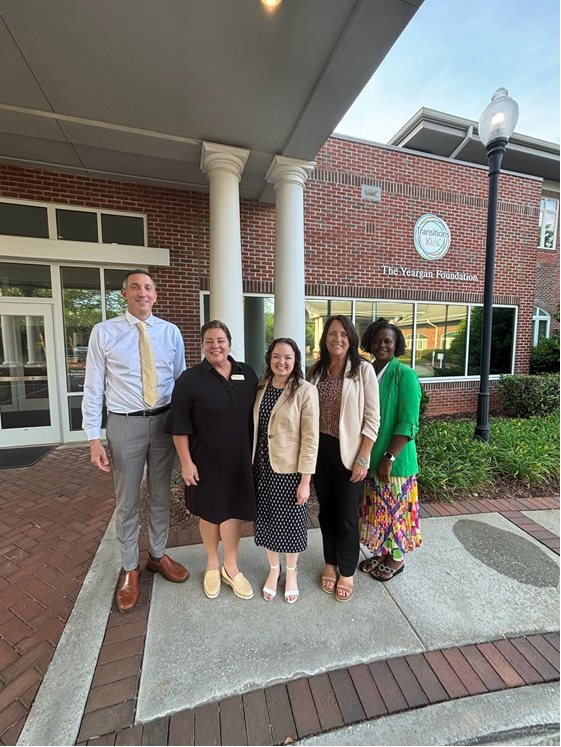
Councilmember Carissa Kohn-Johnson toured Transitions LifeCare. Transitions LifeCare provides hospice, palliative care, and supportive services for individuals and families facing serious illnesses.
Reeds Jewelers Ribbon Cutting
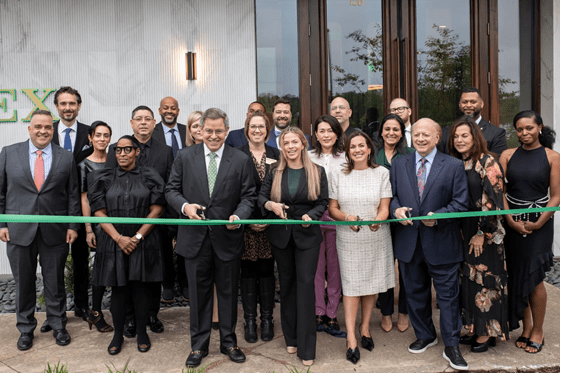
Councilmembers Michelle Craig, Sarika Bansal, and Bella Huang attended the REEDS Jewelers Flagship Celebration at Fenton. The celebration marked the opening of the retailer’s flagship location and highlighted continued economic growth and investment in Cary.
Save Soil Walkathon
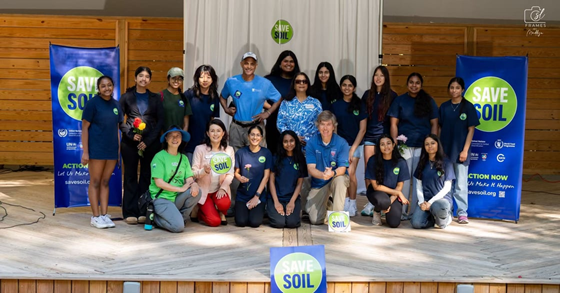
Councilmember Bella Huang delivered remarks and participated in the Save Soil Walkathon at Bond Park. The event raised awareness about soil conservation and sustainable environmental practices.
Kingswood Elementary Walk and Roll to School
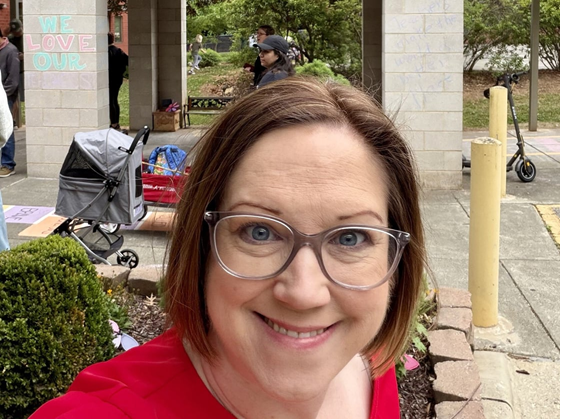
Councilmember Michelle Craig attended the Walk and Roll to School event with Kingswood Elementary School, helping shine a light on the importance of safe routes to school and encouraging healthy, active ways for students and families to get to campus. Events like this promote pedestrian and bicycle safety while building stronger community connections around local schools.
Confidence in Community
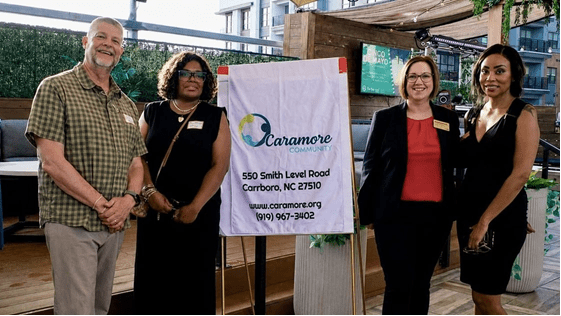
Councilmember Michelle Craig attended the Confidence in Community gathering at AVA Rooftop at Sports & Social in Fenton, which benefited Caramore Community. The event brought together local leaders, community partners, and residents for a meaningful conversation about strengthening connections between mental health, housing, employment, and community well-being in Cary and across the Triangle.
Council Initiated Items
The council has a process that allows members to introduce items for discussion at meetings, often leading to further action. Given the recent increase in these requests, I will begin sharing them here along with my perspective on their pros and cons.
Temporary moratorium on Data Centers
This proposal was submitted by Mayor Pro-Tem Bush, and I provided the second. It has been scheduled for the May 28th Council meeting.
Data centers are centralized facilities that house IT equipment for storing, processing, and distributing massive amounts of data. While they are the vital backbone of the modern internet and AI, they also pose notable environmental and community challenges by requiring massive amounts of electricity and millions of gallons of water. This proposal would direct staff put a moratorium on data center approvals.
PROS:
- They generate significant long-term property and sales tax revenue for local municipalities, often offsetting the need to raise taxes on residents.
- They provide the essential computing power required to run the cloud, stream media, and train heavy AI models.
- Modern facilities offer unparalleled uptime, physical security, and disaster recovery protections for critical business information.
- Unlike large manufacturing plants or warehouses, operational data centers generate minimal daily traffic and produce very little localized air pollution.
CONS:
- We may not have authority to permanently prohibit them.
- They demand immense amounts of electricity and millions of gallons of water for cooling, which can strain local utility grids and drive-up energy costs for surrounding communities.
- Unless heavily offset by renewable energy sources, heavy reliance on power can prolong the use of fossil fuel plants and contribute to electronic waste.
- The constant operation of high-powered cooling fans and backup generators can create significant, round-the-clock noise disturbances for nearby residents.
- While construction creates many temporary jobs, fully operational data centers typically require very few on-site staff, delivering fewer permanent local jobs than other large-scale developments.
Partnering with the school board to pilot school zone safety improvements
This proposal was submitted by Council Member Bansal, and I provided the second. It has been scheduled for the May 28th Council meeting
Several schools in Cary, particularly middle schools and high schools, are experiencing transportation safety concerns on and around school property. While the schools are responsible for transportation operations on campus and NCDOT oversees roadway infrastructure decisions, progress on improvements has been slow and resident complaints have continued to increase. This proposal would direct staff to work collaboratively with the schools on programs and strategies to help address these concerns.
PROS:
- Allows the Town to take a more proactive role, even when we are not the primary decision-maker.
- Responds to growing community concerns regarding school transportation safety.
CONS:
- The Town is currently understaffed, so this effort could require shifting staff resources away from other projects.
- Potential solutions could result in additional costs to taxpayers if Cary contributes funding toward implementation.
E-Bike Safety
This proposal was submitted by Council Members Bansal and Richards and presented at the April 16th meeting. It will come back to council with recommendations at a future meeting.
The council initially launched a pilot program in June 2022 to allow e-bikes. After a one-year trial period, the program was made permanent, with a posted speed limit of 15 mph on greenways. Recently, however, there have been complaints that e-bikes, scooters, and similar devices are traveling at excessive speeds and creating potentially hazardous conditions.
PROS:
- We are listening to our citizens’ complaints.
- Preventing e-bikes and scooters will possibly make greenways safer.
CONS:
- There is basically no way to enforce an ordinance that has e-bikes or not.
- Any enforcement effort would require additional officers and officers’ time. We are currently underfunding officers and require overtime to maintain existing levels of service.
- We are revisiting a decision that was made after a one-year trial and review of data.
Smoke Free Ordinance
This proposal was submitted by Mayor Pro-Tem Bush and Council Member Craig and presented at the April 16th meeting. It will come back at a future council meeting with recommendations.
PROS:
- Eliminates toxic secondhand smoke.
- Current ordinance does not match state law and Raleigh/Wake ordinance.
CONS:
- Any enforcement effort would require additional officers and officers’ time. We are currently underfunding officers and require overtime to maintain existing levels of service.
Affordable Housing on Old Library Site
This proposal, submitted by Mayor Pro Tem Bush and Council Member Bansal, would place a podium-style parking deck with affordable housing on the former library site. This has yet to be scheduled for a meeting agenda.
PROS:
- Adds parking across from Downtown Cary Park.
- Create affordable housing units in the downtown area.
CONS:
- May underutilize one of the municipality’s most valuable properties. Downtown Cary Park generates approximately $16 million annually in economic impact, and this site could represent an opportunity for a more transformative use.
- The town has already invested millions in renovating the Ivey-Ellington House, positioning this area as a premier destination.
How Cary Government Works
Cary’s government, like most cities in North Carolina and most mid-sized cities in the U.S., uses a council–manager form of government. This system works a lot like a company, but for local government. Residents elect a council and a mayor, who set policy by passing laws, approving the budget, and guiding the town’s overall priorities. The council then hires a professional manager to run the town’s day-to-day operations.
Think of it like a company: the council acts like a board of directors, making policy and representing the public, while the city manager acts like a CEO, overseeing all departments, such as finance, public works, police, and fire, and managing town staff. The mayor leads council meetings, represents the town publicly, and has limited executive authority. While the council and mayor make policy decisions and receive regular reports, they usually see only high-level summaries rather than the detailed inner workings of each department.
In short, just as a board hires a CEO to run a company, Cary’s council hires a manager to run the town, ensuring professional management while elected officials focus on big-picture decisions and community priorities.
You can find additional information about how Cary’s government works on the town’s website here.
Mayor’s Mailbox
- A complaint about pedestrian safety at Panther Creek High School.
- Complaints about the budget proposal including comments: “sound like an indignant and spoiled child”, “you are passing issues onto me”, “you show no grace or skill as a politician”.
- Complaints about a Regency Park proposal (No public hearing has been scheduled and council does not have a staff report).
- A complaint about a film shown a few months ago at the Cary theater.
- A complaint about a broken traffic signal in Apex near Laurel Park Elementary.
- Suggestions on how to do a better citizen/resident survey.
- Thanks for public works for picking up recycling that was previously missed.
Next Week
Next week’s activities include staff meetings, a Wake County Mayors Association meeting, a CAMPO Executive board meeting, the Cary Chamber Business Excellence Awards, Cary 101 graduation, and a Diwali Performance meeting.
Well, that is all for this week. My next post will be on Sunday, May 24th, 2026. Although I have Facebook and Twitter accounts, those are not the best means of communication with me. Please send all Town of Cary questions or comments to Harold.Weinbrecht@carync.gov and email personal comments to augustanat@mindspring.com.

