
WRAL Story Misleading Residents Again!
WRAL published a story on Friday about public records showing that Cary employees had listed dance practices on their calendars as yoga workouts. The story then turned to a video of the dance, which reportedly cost “tens of thousands of dollars.” By putting these two issues together, WRAL created the impression that the employees who practiced the dance were also responsible for the decision to videotape it. That is false.
The employees participated in these practices to prepare a surprise performance for council members and staff at the annual retreat. They volunteered hours of their own time to do something thoughtful and fun for their colleagues. I am not aware that they had any involvement in the decision to videotape the performance. In fact, the videotaping was also hidden from council.
It is extremely disappointing that WRAL continues to promote a false narrative that Cary has a “culture of extravagant spending.” Frankly, I am surprised that this story did not include that familiar quote, since it has appeared in so many of WRAL’s stories about Cary.
The employees involved in the dance gave up hours of their personal time, time they could have spent with their families, simply doing something nice for others. This story unfairly portrays them as villains. Nearly a year later, stories like this continue to fuel the persecution of innocent people, including me. Our employees and our community deserve better from the news media.
Cary is moving forward. The expenses incurred by the former town manager were wrong and understandably upsetting. Based on the information I have seen, those expenses would not have amounted to even half a penny on the tax rate. However, the financial cost tells only part of the story. His decisions had broader consequences, and their impact will be felt for years to come.
Cary remains financially strong and has been recognized for its financial stability multiple times this year. We also continue to receive recognition as one of the best places in the nation to live, work, and play. Those distinctions are not earned by communities in turmoil or facing financial distress.
I want to thank the other news organizations that have chosen not to participate in the ongoing “Cary bashing” that WRAL seems so determined to pursue. Cary deserves fair, balanced, and responsible journalism, not a continued effort to define our community by the actions of one former employee.
Ted Abernathy Economic Update
On Wednesday morning, economist Ted Abernathy addressed a full house of business leaders and community members at the Cary Chamber Breakfast, held at Prestonwood Country Club. His presentation offered a comprehensive look at national and regional economic trends, North Carolina’s business climate, and the opportunities and challenges facing the Triangle and Cary in the years ahead.
Abernathy covered a wide range of topics, from employment and consumer spending to housing, population growth, workforce development, artificial intelligence, and the changing global economy. Below are some of the key takeaways and notable statistics from his presentation.
North Carolina and the Triangle Remain Strong Business Destinations
North Carolina continues to rank among the nation’s top states for business, placing between second and fourth in major national business rankings. The Raleigh Metropolitan Statistical Area (MSA), which includes Cary, ranked second nationally.
When businesses evaluate potential relocation sites, access to reliable electricity and infrastructure is increasingly important. According to Abernathy, 83% of businesses consider electric power availability a priority, followed by transmission and substation capacity (74%), skilled labor availability (65%), and grid reliability and redundancy (63%).
North Carolina also ranks in the top third nationally for real GDP growth. Worker output per hour has surpassed its pre-pandemic trend, and the state’s productivity growth since 2019 stands at 9.7%, compared with 9.9% nationally.
National Economic Trends and Consumer Spending
While the economy continues to grow, the pace of growth has moderated. U.S. GDP growth has slowed to 2.2%, its lowest rate in five years. Consumer spending increased 3.8%, while business investment surged 12.7%, the fastest growth in six years, largely driven by investment in AI infrastructure.
National employment growth is also slowing, with average annual non-farm payroll gains approaching zero. However, the Raleigh area continues to outperform much of the country, recording the nation’s highest non-farm employment growth among the areas highlighted, at 2.3%.
Consumer spending patterns suggest that households are facing increasing financial pressure. Personal consumption expenditures increased 0.5% in September, down from a 0.9% gain in August. After adjusting for a 0.5% increase in prices, real spending was flat. Inflation-adjusted disposable income fell 0.3%, the steepest monthly decline since April.
As spending continues to outpace income growth and inflation erodes purchasing power, the personal savings rate has declined. Abernathy cited a rate of 3.8%, the lowest since October 2022, while another measure presented showed savings at 4.1% of disposable personal income.
Other notable economic indicators included:
- Personal income increased 4.7% nationally and 5.1% in North Carolina.
- Overall private-sector compensation costs rose 3.4% over the 12 months ending in September, compared with 3.5% during the same period a year earlier.
- Wage and salary compensation increased 3.1%, down from 3.6% a year earlier.
- Health benefit costs increased 6.4%, compared with 6.1% during the comparable period ending in September 2025.
- The Consumer Price Index for all items excluding food and energy increased 2.6%.
- Fuel oil prices increased 74.2%, while motor fuel prices rose 34.9%.
Another indicator of household financial pressure is the growing length of automobile loans. In 2015, approximately 15% of car loans had terms of 72 months or longer. That share increased to 25% by 2022 and remained there through 2025. It is now rising again and has exceeded 30%.
Employment and Workforce Challenges
The Raleigh area continues to demonstrate strong employment performance. Cary employment increased from 98,536 to 99,181 over the past year, while the town’s unemployment rate remained very low at 2.9% through August.
However, workforce availability and changing skill requirements present significant challenges. Nearly one-quarter of tradespeople are age 55 or older, while only 11% are under age 25. Additionally, only about 48 out of every 100 people who begin an apprenticeship or community college workforce program complete it.
Abernathy emphasized that the economy is rapidly shifting from a need for large numbers of workers to a need for workers with highly specialized skills.
North Carolina has also outpaced national averages in several high-growth employment sectors over the past five years:
- Technology jobs grew 18.4% in North Carolina, compared with 10.1% nationally.
- Advanced industry jobs grew 15.8% in North Carolina, compared with 10.1% nationally.
Looking ahead, workforce demographics will create additional challenges. High school graduation numbers peaked at an estimated 3.9 million in 2025 but are projected to decline to approximately 3.4 million by 2041, a decrease of nearly 13%, largely because of declining birth rates. College enrollment is expected to follow a similar trend.
Abernathy also noted that current immigration policies are projected to reduce the U.S. workforce by 6.8 million people by 2028 and 15.7 million by 2035.
Real Estate and Housing: A Challenging Market
Despite strong national and regional rankings for economic and real estate prospects, the local housing market is experiencing a significant slowdown.
The Raleigh-Durham MSAs rank fourth nationally for overall real estate prospects, and the Raleigh MSA ranks 11th nationally for housing starts. Nevertheless, construction activity is declining across most sectors, with data center construction standing out as a major exception, increasing 64%. Abernathy also noted that eldercare facilities lost jobs in September.
In Cary, the total value of building permits issued so far this year stands at $198,869,711, the lowest level for this point in the year since 2015. Both commercial and residential permit activity are down.
Other notable local housing statistics include:
- Homebuying activity is at one of its lowest levels in years, excluding the pandemic period.
- New residential permits in Cary are at their lowest level in decades. Among the 12 municipalities in Wake County, Cary ranks second lowest, behind Morrisville.
- The number of residential properties sold in Cary is at its lowest level in decades, with 2011 being the only comparable year with one fewer sale.
- Cary residential sale prices have declined slightly since 2024.
- Despite the slowdown, Cary has the highest average single-family residential property value in Wake County, at $649,334.
These figures highlight the contrast between Cary’s continued desirability and the growing affordability challenges facing prospective homeowners.
Population Growth and Changing Demographics
North Carolina’s population is projected to grow 9.4% over the next 10 years. The Raleigh MSA is expected to grow even faster, with projected population growth of 15.6% over the next five years, the second-highest rate in the nation, behind Austin. Over the next 10 years, the Raleigh MSA is projected to grow 20.6%.
Raleigh was also ranked the nation’s top city for Generation Z.
This anticipated growth presents significant opportunities, but it also creates challenges for communities trying to maintain affordability and quality of life. Cary’s desirability has become a source of increasing affordability pressure, particularly for younger workers, teachers, public employees, and first-time homebuyers.
Artificial Intelligence: Opportunity and Uncertainty
Artificial intelligence was another major theme of Abernathy’s presentation. While AI infrastructure investment is helping drive business investment and economic growth, the long-term economic impact remains uncertain. He outlined two very different potential futures.
If AI disappoints:
- Investment slows.
- Stock market valuations correct.
- Household wealth declines.
- Consumer spending weakens.
- GDP growth and employment weaken.
- Debt becomes a greater economic vulnerability.
If AI delivers on its promise:
- Investments generate sustainable returns.
- Corporate earnings support market valuations.
- Household wealth increases.
- Real income and consumer spending grow.
- GDP growth accelerates.
- Debt is supported by productive assets.
Abernathy also noted that more young adults are expressing concern than excitement about AI, highlighting the uncertainty and apprehension surrounding its growing influence on the economy and workforce.
A Changing Global Economy and Business Environment
Businesses and policymakers are increasingly prioritizing security, reliability, and redundancy over efficiency alone. This shift toward resiliency is changing supply chains, infrastructure investments, and business decisions.
U.S. imports continue to move away from China and toward Mexico, India, and Southeast Asia. At the same time, the share of Canadian trade flows directed to the United States has fallen to its lowest level in more than 30 years, with both U.S. import and export shares declining significantly since 2025.
Abernathy also highlighted the growing importance of information and transparency in business decision-making. Greater access to data, real-time comparisons, and more transparent information allows consumers and businesses to identify the best available options. However, this increased transparency is also widening the gap between businesses and communities that adapt successfully and those that do not.
What Does This Mean for Cary and the Triangle?
Abernathy’s overarching message was that the past five years have fundamentally changed how we work, live, and grow. The next five years will determine which communities can successfully adapt, remain affordable, and sustain long-term prosperity.
The Triangle is well positioned to benefit from its universities, technology companies, and highly educated workforce. Its attractiveness to mobile professional talent continues to grow. However, the region’s substantial concentration of professional services employment also makes it vulnerable to disruption from AI and other technological changes. Traditional office development and established employment patterns face new challenges as the nature of work continues to evolve.
For Cary, continued population and economic growth bring tremendous opportunities, but they also require thoughtful planning. Housing affordability, transportation infrastructure, schools, water resources, and the preservation of quality of life will become increasingly important as the community grows.
The bottom line: Cary and the Triangle have many advantages, including a strong business climate, a skilled workforce, a growing population, and a highly desirable quality of life. However, maintaining that competitive edge will require adaptability, strategic investment, workforce development, and a continued focus on affordability and infrastructure. The communities that successfully navigate these changes will be best positioned for long-term economic prosperity.
Recommendations Committee
The Town Council subcommittee known as the Recommendations Committee met Wednesday evening to review draft policy recommendations addressing council travel, training, conferences, events, and meal expenses.
The recommendations will be presented to the full Council during its November 19 work session, when council members will have an opportunity to provide feedback on both new and existing policies. Following that discussion, the Town Attorney will incorporate the Council’s comments into draft ordinance language. The proposed ordinances will then be brought back to the Recommendations Committee for review in December, with final Council approval anticipated by February.
Below is a summary of the committee’s recommendations:
- Retain Policy Statement 164 – Code of Ethics for the Town Council. Council members will reaffirm their commitment to the Code of Ethics every two years during the organizational meeting.
- Use the Gifts and Favors flowchart to help guide decisions regarding meals and potential gifts.
- New Policy Recommendation 1 – Annual Expense Allocation: Travel, training and conference attendance, and event and meal expenses incurred by individual Council members will be capped at $5,000 per fiscal year. This allocation will be reviewed annually and incorporated into the budget process. If a Council member exhausts their allocation, they may use the Council Initiated Item agenda process to request Council approval for additional expenses. Any expenses exceeding the available allocation without prior Council approval will be the personal responsibility of the Council member, who will be reimbursed only up to the remaining amount of their allocation.
- New Policy Recommendation 2 – Travel and Per Diem: Council members will follow the same travel and per diem policies as Town employees, with the exception of mileage reimbursement.
- New Policy Recommendation 3 – Expense Transparency: All travel, training and conference, and event and meal expenses incurred on behalf of Council members will be disclosed in a report included on the Council’s consent agenda. The report will identify the Council member, describe the expense, and include the amount and location.
- New Policy Recommendation 4 – Sharing Information and Takeaways: Following travel, conference or training attendance, or another learning opportunity, Council members will provide the full Council with a summary of key takeaways within 30 days. The summary will be emailed to Council members and the Town Clerk and included on a future Council consent agenda.
- New Policy Recommendation 5 – Event Attendance and Cancellations: Council members are expected to attend events for which expenses have been incurred. If a Council member’s availability changes, they should notify the Town Clerk’s Office as soon as possible. Any nonrefundable charges or cancellation fees will count toward that Council member’s annual expense allocation.
- New Policy Recommendation 6 – Annual and Biennial Reviews: Council expenses will be reviewed annually as part of the budget process. Council policies will be reviewed every two years following the biennial organizational meeting.
The Recommendations Committee will meet again on December 14 at 5:15 p.m.
Council-Staff Quarterly
A council-staff quarterly meeting was held on Thursday. Topics included a legislative update, a financial update, GoCary service options, and a Planning and Community Development update.
Introduction and Staffing Updates
The meeting began with the introduction of our new budget director. This position had been eliminated by the former town manager but was reinstated as part of this fiscal year’s budget. We also budgeted for an internal auditor, and recruitment for that position is currently in the interview stage.
Legislative Update
During the legislative update, the town attorney reviewed the results of the most recent election, including the amendments presented to voters. The property tax cap amendment passed, but no specific cap amount was included. That amount will need to be determined by the General Assembly.
We also briefly discussed the build-by-right legislation passed in August. I asked whether the town would consider requesting that our local legislative delegation introduce a local bill exempting Cary from this legislation. The council agreed to pursue this option.
Financial Update
The financial update focused primarily on the first quarter of the fiscal year, which began July 1. Key takeaways included:
- Expenditures totaled $91 million in the first quarter, compared to $75 million during the same period last year.
- Revenues remained consistent with the first quarter of last year.
- Property taxes account for 61% of town revenues, while sales taxes account for 21%.
- In the utility fund, both revenues and expenditures increased. Revenues were up 14%, while expenditures increased by 34%.
- The Finance Department’s primary focus areas this past quarter included the annual independent audit, implementation of OSA recommendations, the utility billing project, prioritization of Oracle optimization efforts, and recruitment for the internal auditor position.
GoCary Service Update
The GoCary update provided an overview of current services and potential service changes.
- GoCary currently operates eight fixed routes with daily service and connections to GoTriangle, GoRaleigh, GoApex, and Morrisville.
- The Smart Shuttle provides door-to-door transportation service.
- The downtown loop was discontinued this year. However, the town is required to repurpose the 2,518 service hours to remain eligible for Wake Transit funding.
- 20% of funding comes from Cary for current routes. Wake Transit tax accounts for 40% with state and federal funds accounting for the remainder.
Staff presented two potential options for repurposing those service hours:
- District D: Service extending toward Panther Creek High School and looping to Green Level Road, where it would connect with Cary Route 4.
- District C: Service connecting Waverly Place to Wake Tech on Penny Road.
The council approved a motion directing staff to return with additional service options for the District D proposal.
Planning and Community Development Update
The Planning and Community Development update highlighted several trends in Cary’s development and housing markets:
- Reinvestment in existing properties and redevelopment are at the highest levels in Cary’s history.
- Only 12% of Cary’s developable land remains.
- The residential market continues to be strong.
- The Weston Special Planning Area initiative is moving forward.
- Single-family home permits have declined significantly, with only 43 issued during the first quarter of this fiscal year.
- The median home sales price in Cary is $628,998, compared to approximately $510,000 across the broader metropolitan area.
- There is currently a two-month supply of homes on the market.
- Multifamily rental rates have declined 11.1% from their peak in 2022.
- Cary’s multifamily vacancy rate is 6.3%, compared to 7% across the metropolitan area.
- Re-evaluation starts on January 1st.
Weston Special Planning Area
Staff also provided an update on the Weston Special Planning Area and outlined the key objectives guiding the planning effort:
- Identify and preserve successful existing uses and established neighborhoods.
- Identify opportunities for future growth.
- Provide more detailed guidance for redevelopment.
- Enhance transportation and mobility choices.
- Activate the lakefront.
- Preserve and protect viewsheds, tree canopy, and environmental features.
- Establish a coordinated and intentional vision for the corridor to guide thoughtful, inspired development.
Community engagement for the Weston Special Planning Area is expected to begin during the winter and spring of next year.
Overall, the meeting provided updates on the town’s financial position, legislative issues, transit planning, and development trends, along with several important initiatives that will shape Cary’s future.
Police Chief Sult Retires
On Friday, it was announced that our Police Chief, Terry Sult, will retire after five years of service as Cary’s Police Chief.
I was fortunate to spend time with Chief Sult when he was first hired as interim chief. Even then, it was clear that he was a visionary leader. He often described Cary as a midsized city with a small-town mindset, and he recognized that changes would be necessary to address challenges before they became problems in the future.
What impressed me most was that everything he shared with me at the time ultimately came to fruition. He accomplished the objectives he had set out to achieve and helped position Cary’s Police Department for the future.
We were truly fortunate to have Chief Sult serve Cary for these past five years, especially considering that he came out of retirement to take on this important role. His career in law enforcement spanned five decades, reflecting a lifetime of dedication and service.
Thank you, Chief Sult, for your leadership, vision, and commitment to our community. Cary was blessed to have you.
The following is the Town of Cary’s press release:
“After more than five years with the Cary Police Department and over five decades in law enforcement in three states, Cary Police Chief Terry Sult has decided to retire effective January 15, 2027. Sult became Cary’s 14th Chief in 2022 after having been named Interim Chief in 2021.
“I want to thank Terry for his work to strengthen leadership capabilities in the department and develop a strategic plan for the future, all while upholding Cary’s reputation as one of the safest communities in America,” said Town Manager Russ Overton. “We wish him well in his retirement.”
Regarding his decision, Sult said, “When I came to Cary, I was asked to address internal leadership development and enhance the Department’s preparedness capabilities. I agreed to three to five years of service. I believe both the Department and I have met those obligations. Now, after 50 years in policing, it’s time to relax and spend time with my family. I want to thank the residents of Cary, the Council, and the Manager for the time we spent together. It’s been an honor.”
Sult, 69, began his career with the Charlotte-Mecklenburg Police Department where he rose to the rank of Captain. He later led departments in Gastonia, North Carolina, Sandy Springs, Georgia, where he also served as Public Safety Director, and Hampton, Virginia.
As for his plans to select Cary’s next Chief, Overton said that he wants to have conversations with the Police Department in the coming weeks, then work with the Town’s Human Resources staff on options for a 2027 recruitment process.
The Cary Police Department has 270 staff, of which 218 are sworn officers. The Department has been nationally accredited since 1992 by the Commission on Accreditation for Law Enforcement Agencies, Inc.”
Veterans Luncheon
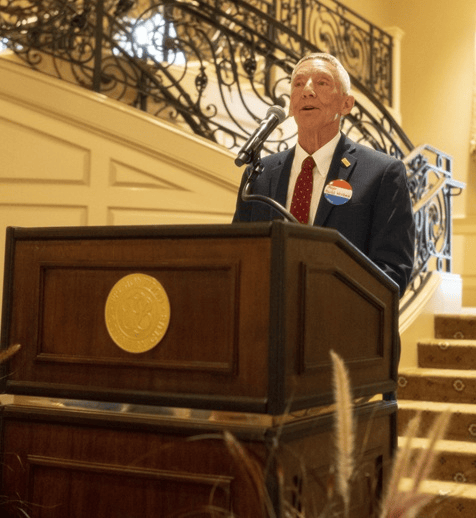
I had the honor and privilege of attending and participating in the Town of Cary’s Veterans Day Luncheon at Prestonwood Country Club. Council Member Richards joined me as we welcomed veterans and their family members upon their arrival.
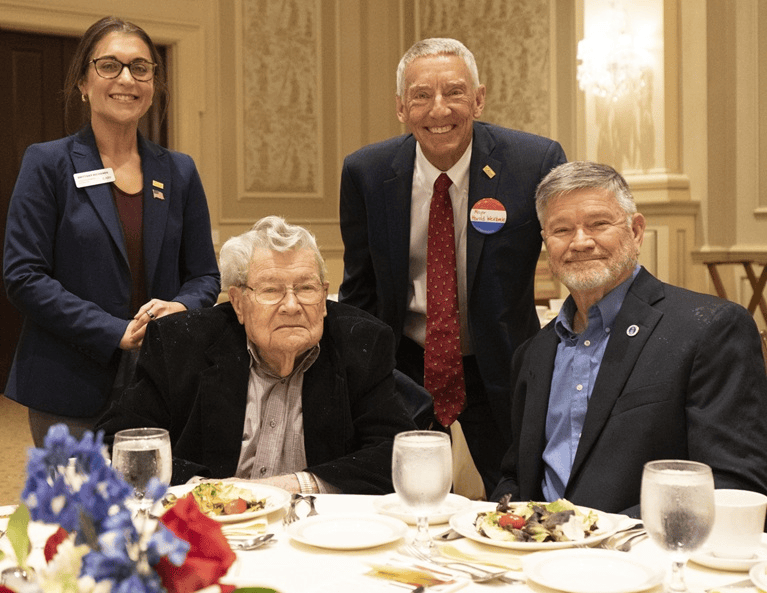
One particularly special attendee was a 99-year-old World War II veteran. It was truly an honor to meet him and have my picture taken with him. His service and the sacrifices made by his generation are a powerful reminder of the freedoms we enjoy today.
I was also honored to welcome everyone and introduce our featured speaker, Lieutenant Colonel (Retired) W. Larry Dandridge. A decorated Army veteran, combat aviator, award-winning author, and passionate advocate for our nation’s veterans, Lieutenant Colonel Dandridge served in combat during the Vietnam War and went on to build a distinguished career in business, education, and hospice leadership. He is the author of Blades of Thunder and has devoted countless hours to supporting veterans, military families, and Fisher House.
During his remarks, he encouraged veterans to share their personal stories through the Library of Congress Veterans History Project, helping preserve their experiences and sacrifices for future generations.
Following the program and expressions of gratitude to our veterans, my colleague and I departed. Because this event had a waiting list, I believe it is important that we reserve these seats for the veterans and family members the luncheon is intended to honor, rather than having council members remain as guests.
To all who have served, thank you for your courage, your sacrifice, and your dedication to our country. We are forever grateful for your service!
God bless our veterans and God bless America!
Cooper’s Hawk Ribbon Cutting
On Saturday, I had the privilege of participating in the ribbon-cutting celebration for the new Cooper’s Hawk at Parkside Commons!
The Cooper’s Hawk concept brings together four unique experiences under one roof: an upscale casual dining restaurant, a full-service bar, a private dining room, and a Napa-style tasting room and retail wine and gift store.
Cary appreciates exceptional dining, elevated experiences, and an outstanding quality of life, making Cooper’s Hawk a wonderful addition to our community. I have no doubt they will be incredibly successful in this location!
Congratulations to the entire Cooper’s Hawk team, and welcome to Cary!
Mayor’s Mailbox
- A complaint about fireworks at Diwali celebrations.
- Several requests for comments on student projects.
- A request to have a Veteran’s Month.
- A question about when we are hiring an internal auditor (interviews are ongoing).
- A complaint about pedestrian and bicycle safety at Green Level Church Road near Autumnwood.
- A request to fire employees who participated in the Dancing Queen Video (they were not involved in the decision to video tape).
Next Week
Next week’s activities include staff meetings, a Veterans Day event, and the Groundbreaking of the GoCary Bus Operations and Maintenance Facility.
My next post will be on Sunday, November 15th, 2026. Please send all Town of Cary questions or comments to Harold.Weinbrecht@carync.gov. Note that all emails sent to me in my role as mayor are public documents.
Dashboard of Recommendations by Cherry Bekaert, OSA, and Womble Bond Dickinson
The latest updates on the Town’s actions in response to recommendations from Cherry Bekaert, the Office of the State Auditor (OSA), and Womble Bond Dickinson are available on the Town’s Moving Forward Dashboard. There are 39 recommendations in total. This link gives the progress on each of those recommendations:
https://www.carync.gov/connect-engage/newsroom/bottom-line/moving-forward-dashboard
You can also sign up to receive notifications whenever the dashboard is updated.
Council Initiated Items
The council has a process that allows members to introduce items for discussion at meetings, often leading to further action. Given the recent increase in these requests, I will begin sharing them here along with my perspective on their pros and cons.
Partnering with the school board to pilot school zone safety improvements
This proposal was submitted by Council Member Bansal, and I provided the second. It was brought up at the May 28th Council meeting.
Several schools in Cary, particularly middle schools and high schools, are experiencing transportation safety concerns on and around school property. While the schools are responsible for transportation operations on campus and NCDOT oversees roadway infrastructure decisions, progress on improvements has been slow and resident complaints have continued to increase. This proposal would direct staff to work collaboratively with the schools on programs and strategies to help address these concerns.
PROS:
- Allows the Town to take a more proactive role, even when we are not the primary decision-maker.
- Responds to growing community concerns regarding school transportation safety.
CONS:
- The Town is currently understaffed, so this effort could require shifting staff resources away from other projects.
- Potential solutions could result in additional costs to taxpayers if Cary contributes funding toward implementation.
E-Bike Safety
This proposal was submitted by Council Members Bansal and Richards and presented at the April 16th meeting. It was part of our June 23rd work session.
The council initially launched a pilot program in June 2022 to allow e-bikes. After a one-year trial period, the program was made permanent, with a posted speed limit of 15 mph on greenways. Recently, however, there have been complaints that e-bikes, scooters, and similar devices are traveling at excessive speeds and creating potentially hazardous conditions.
PROS:
- We are listening to our citizens’ complaints.
- Preventing e-bikes and scooters will possibly make greenways safer.
CONS:
- There is basically no way to enforce an ordinance that has e-bikes or not.
- Any enforcement effort would require additional officers and officers’ time. We are currently underfunding officers and require overtime to maintain existing levels of service.
- We are revisiting a decision that was made after a one-year trial and review of data.
Council will vote on a draft ordinance of this later this year.
Smoke Free Ordinance
This proposal was submitted by Mayor Pro-Tem Bush and Council Member Craig and presented at the April 16th meeting. It was part of our June 23rd work session.
PROS:
- Eliminates toxic secondhand smoke.
- Current ordinance does not match state law and Raleigh/Wake ordinance.
CONS:
- Any enforcement effort would require additional officers and officers’ time. We are currently underfunding officers and require overtime to maintain existing levels of service.
The council did not have enough votes to amend the current ordinance at the October 8th meeting. It will return for another vote at a future meeting.
Affordable Housing on Old Library Site
This proposal, submitted by Mayor Pro Tem Bush and Council Member Bansal, would place a podium-style parking deck with affordable housing on the former library site. This has yet to be scheduled for a meeting agenda.
PROS:
- Adds parking across from Downtown Cary Park.
- Create affordable housing units in the downtown area.
CONS:
- May underutilize one of the municipality’s most valuable properties. Downtown Cary Park generates approximately $16 million annually in economic impact, and this site could represent an opportunity for a more transformative use.
- The town has already invested millions in renovating the Ivey-Ellington House, positioning this area as a premier destination.
How Cary Government Works
Cary’s government, like most cities in North Carolina and most mid-sized cities in the U.S., uses a council–manager form of government. This system works a lot like a company, but for local government. Residents elect a council and a mayor, who set policy by passing laws, approving the budget, and guiding the town’s overall priorities. The council then hires a professional manager to run the town’s day-to-day operations.
Think of it like a company: the council acts like a board of directors, making policy and representing the public, while the city manager acts like a CEO, overseeing all departments, such as finance, public works, police, and fire, and managing town staff. The mayor leads council meetings, represents the town publicly, and has limited executive authority. While the council and mayor make policy decisions and receive regular reports, they usually see only high-level summaries rather than the detailed inner workings of each department.
In short, just as a board hires a CEO to run a company, Cary’s council hires a manager to run the town, ensuring professional management while elected officials focus on big-picture decisions and community priorities.
You can find additional information about how Cary’s government works on the town’s website here.
Purpose of this Blog
It is my hope that this blog will provide insight not only into who I am meeting with on behalf of the Town, but also the topics we discuss. I believe strongly in open and transparent government. This blog is one of several initiatives I implemented when I became mayor in 2007 to make the governmental process more accessible to our citizens.
This blog is written with sincerity, honesty, and a commitment to accuracy so our constituents can better understand the work we do. After all, we work for them!

