
TST Created $16.2 Million Economic Impact
Cary was notified this week that TST (The Soccer Tournament) generated a $16.2 million direct economic impact for the town. That figure is especially significant as Cary’s population growth begins to slow and property taxes currently account for roughly 60% of the town’s revenue.
Looking ahead, Cary’s financial future will increasingly depend on diversifying our revenue sources and maximizing the economic benefits of major events like TST. These events bring visitors, support local businesses, and generate meaningful economic activity, making them an increasingly important part of Cary’s long-term strategy.
Here is the town’s press release:
The Soccer Tournament (TST) delivered its biggest year yet in Cary in 2026, generating an estimated $16.2 million in direct economic impact while drawing record in-person and global audiences to WakeMed Soccer Park.
According to the Greater Raleigh Convention and Visitors Bureau (GRCVB), TST’s estimated direct economic impact increased 10% from $14.7 million in 2025. Of the tournament’s 57,942 attendees, an estimated 34,488 traveled from outside Wake County, including 23,304 overnight visitors. The six-day event generated an estimated 22,385 room nights and more than $607,000 in direct local tax revenue.
The Tournament also reached its largest viewership audience to date. Its NBC semifinal averaged 433,000 viewers, making it the most-watched match in TST history. Matches generated 35.5 million impressions on YouTube and reached more than 1 million unique viewers, with audiences tuning in from more than 180 countries.
“TST’s record year is something all of Cary can be proud of,” said Cary Mayor Harold Weinbrecht. “Each year, our residents get a front-row seat to a world-class soccer festival right here in Cary, while our local businesses benefit from the tens of thousands of visitors it brings. People from around the world get to see what makes Cary special, and I’m thankful to our outstanding staff and partners who work so hard to make it happen.”
TST’s fourth year featured 76 teams, more than 2,000 athletes, and 159 matches. Athletes from 27 countries traveled to Cary to compete with teams representing 14 nations. For the first time, the event included three $1 million winner-take-all competitions. Hernandez United claimed the men’s championship, Iowa Demon Hawks won the women’s championship, and Peluche Hawks FC captured the inaugural mixed title.
“TST continues to grow every year in Cary,” said TST founder and CEO Jon Mugar. “We are proud of the impact the tournament has had on the community and look forward to working with Cary to make the event even bigger in the years ahead.”
ary to make the event even bigger in the years ahead.”
The Cary Cup Broadens the Impact
Cary launched The Cary Cup in 2025, in coordination with TST, to bring the professional tournament experience to youth players from across the country. The youth tournament uses TST’s 7v7 format and Target Score Time™, and games are played across western Wake County at parks in Cary, Apex, and Holly Springs. Finalists advance to WakeMed Soccer Park to compete during TST.
In its second year, The Cary Cup generated an estimated $1.48 million in direct economic impact, according to a separate GRCVB analysis. The youth tournament welcomed 10,000 attendees, including 4,019 visitors from outside Wake County. More than 2,500 were overnight visitors, bringing in nearly $58,000 in direct local tax revenue.
“What stands out is the scale of overnight visitation these events are generating,” said Greater Raleigh Sports Alliance Executive Director Scott Dupree. “In addition to the TST fans, The Cary Cup brought another significant group of traveling families to Wake County. These visitors support hotels, restaurants, shops, and other businesses well beyond the soccer fields.”
Cary expanded The Cary Cup in 2026 with additional boys’ and girls’ age divisions, a dedicated Cary Cup Night at TST, and championship matches during TST’s Sunday semifinals. Registered players also received access to TST sessions, further connecting the youth and professional tournaments.
Building for the Future
The record-setting 2026 results are the first under Cary and TST’s long-term agreement to keep TST and the partnered youth tournament through 2029.
Announced in October 2025, the agreement is supported by the N.C. Department of Commerce’s Major Events, Games, and Attractions (MEGA) Fund. The state grant will reimburse qualifying in-state expenses up to $6.8 million over the duration of the agreement, recognizing TST’s ability to attract visitors, generate economic activity, and showcase North Carolina to audiences beyond the state.
“North Carolina created the MEGA Fund to compete for major events that bring visitors and spending to our communities,” said N.C. Commerce Secretary Lee Lilley. “TST’s continued growth in Cary demonstrates the kind of long-term opportunity that strategic investments in major events can create.”
Cary has hosted TST at WakeMed Soccer Park since the tournament began in 2023. The 158-acre park has a long history of hosting championship soccer and will add another milestone in December, when Cary hosts both the NCAA Division I Men’s and Women’s College Cups.
I look forward to hosting TST for the next few years and hopefully years to come.
Council Subcommittee Meeting
A subcommittee of the Cary Council met for the first time on Monday. Our task is to review and research the recommendations from the State Auditor and Womble Bond Dickinson and make recommendations to the full Council.
We met for two hours and are scheduled to meet again at 5:15 p.m. on September 14, September 21, and September 28. Our goal is to have our recommendations completed by September 28, although the process could take longer if additional research or discussion is needed.
One recommendation we anticipate making is that Cary’s ethics requirements be affirmed annually. Some Council members are already required to complete annual ethics statements. For example, I am required to do so because I am a member of CAMPO.
Most of our first two-hour meeting was spent brainstorming and identifying questions that need further research. Some of the comments and questions I noted included:
- We need to look at municipal best practices.
- Some recommendations may need to be temporary while more permanent changes are developed.
- How much is currently being spent on Council travel?
- What is the staff’s current procedure for travel and meals, and who approves those expenses?
- Should conference attendance fees be separated from travel and training expenses?
- Should we consider budgeting a specific amount for each Council member?
- We need to clearly define local versus out-of-town travel.
- Should all receipts be available for public viewing and possibly included on the consent agenda?
- The Town Attorney will provide additional guidance on what constitutes a “gift or favor.” This will help determine whether Council members can attend certain functions and accept meals or other benefits.
- The committee also agreed that all emails and other information related to the committee’s work will be made available online for public viewing.
Each committee member was assigned homework for the September 14 meeting. Council Member Kohn-Johnson will return with information on compensation. Council Member Richards will provide information and examples regarding Council training, travel, and meals. I will provide information on Council benefits, which are addressed in Town Policy 117.
Cary Chamber Annual Banquet
Wednesday evening, I had the pleasure of joining Council Member Huang at the Cary Chamber’s Annual Banquet. Each year, this event recognizes outstanding individuals and organizations in our community through the Distinguished Service Awards, Ambassador of the Year, Citizen of the Year, and Business of the Year awards.
I was honored to offer a few remarks before the keynote speaker was introduced. The following is the text of the remarks:
“Good evening and thank you for being here and for giving me a few minutes to speak with you. Cary continues to receive negative attention related to our former town manager, with some in the media attempting to promote a narrative that Cary is a failing community in decline. That narrative is false. I am not saying we are not taking this situation seriously. We are making adjustments to strengthen our organization and put safeguards in place to help prevent another bad actor from compromising the town manager’s office. We are reviewing our practices, strengthening oversight, and identifying ways to make Cary an even stronger, more accountable, and more resilient community.
But it is important to keep this situation in perspective: Cary’s fundamentals remain exceptionally strong. Our financial management is recognized by the major bond rating agencies as sound and responsible with their highest ratings possible. We continue to have one of the lowest tax rates in the county. Our unemployment rate is the lowest in Wake County, and we continue to add jobs.
And Cary remains one of the best places to live in the United States. Just within the last month, Cary was recognized as the No. 3 best municipality in the country by HomeSnacks and ranked No. 11 among the best places to live in the country by U.S. News & World Report.
To say Cary’s future is bright would be an understatement.
But Cary has never rested on our accomplishments and that is why we continue to be the best of the best. To be the best of the best is the Cary way. And as it is with the Cary way, it is a time to think strategically about what comes next.
More than 60% of our revenue comes from property taxes which have been driven by population growth. And as Cary matures and becomes increasingly built out, our population growth is naturally slowing. That means that, now more than ever, economic growth is essential to our future. You are essential to our future.
I believe the long-term success of Cary depends heavily on the continued growth and strength of our business community. And we are fortunate to have tremendous assets working in our favor.
We have one of the strongest chambers of commerce in the nation. We have one of the strongest business climates in the country. And we have a community that attracts talented people, innovative companies, and entrepreneurs who want to build their businesses and their futures here.
These are not the characteristics of a community in decline.
They ARE the characteristics of a community preparing for its next chapter.
Cary has faced a difficult period, and we have important work ahead of us. But we should not allow one individual or one chapter in our history to define this community.
Our foundation is strong.
Our finances are strong.
Our workforce is strong.
Our business community is strong.
And our future is strong.
Now is the time to build on those strengths, learn from our challenges, and make Cary even better than it is today.
Cary is not just positioned to succeed—we are positioned to lead. Our job now is to build on that foundation, protect what makes Cary special, and continue creating the economic opportunities that will keep this community strong for generations to come.
Thank you for being here tonight and for all you do in Cary.”
Our keynote speaker was Ambassador James P. Cain, whose distinguished career spans law, business, professional sports, diplomacy, and publishing. He served as U.S. Ambassador to Denmark from 2005 to 2009, leading a 150-person embassy.
His presentation featured slides, photographs, and fascinating stories from his time as ambassador. He was such an engaging speaker that I could have listened to him for hours.
A big thank you to Ambassador Cain for joining us in Cary and sharing his experiences and insights with us!
Meeting with Applicant on Development Called Number 5
Thursday morning, I met with a representative regarding a proposed mixed-use building at 602 West Chatham Street and 523 Old Apex Road, on approximately two acres. The rezoning for this property was approved in December 2022.
Our discussion focused on potential changes to the developer agreement. While the agreement remains largely unchanged, the developer is requesting an additional 50 units without increasing the height or width of the building.
In addition, the Town’s financial commitment would decrease significantly, from $3.5 million to approximately $1 million. This commitment primarily relates to fees and public infrastructure.
When the proposed changes come before the Council at a future meeting, I have asked that the item not be placed on the consent agenda so that Council can discuss the changes publicly.
Council Work Session
The council held a work session Thursday evening titled “Fund Balance Training,” which will address one of the state auditor’s recommendations. While the title might suggest that the council does not understand fund balance (essentially, savings), that is not the case.
In my opinion, the purpose of the session was to explain the different components of fund balance, clarify which portions are available for adjustment and which are not, and provide a better understanding of how the balance is structured. This will set the stage for discussion about whether we should adjust our fund balance policy to better align with communities of our size, particularly since our current balance is well above that of most comparable communities.
It really doesn’t have much to do with issues related to the former town manager. Nevertheless, the staff went over the purpose of fund balance mostly for the audience’s benefit.
Here are some things I noted that may be of interest:
- The purpose of fund balance is cash flow, emergency & contingency reserves, and planned capital and one-time expenditures.
- There are four basic buckets:
- Nonspendable: Cannot be spent (inventory, prepaid expenses)
- Restricted: Legally required for specific purposes (e.g. restricted by state statute, grants)
- Committed: Set aside by formal action (Council decisions)
- Unassigned: No restrictions or designations
- The GFOA (Government Finance Office Administration) recommends unrestricted equal to two months of operations
- Cary’s policy is 33.33% of budgeted General Fund Expenditures which is equal to about four months of operations, double what GFOA recommends.
- A graph showed that we dipped below our fund balance policy in FY2023 which was not disclosed at that time. (We did find out last November and that was one of the reasons for dismissing the former manager)
- Currently Cary has about 41% of operations in total fund balance.
- Currently there is $60.5 million in assigned and unrestricted categories, which is equal to 23% of our operation budget.
- Charlotte’s policy is a General Fund balance equal to 16% of the operating budget.
- Greensboro’s policy is 9% of operations in the unassigned category.
- Durham’s policy is 12% of operations in the unassigned category.
- Asheville’s policy is 15% of operations in the unassigned category.
- Winston-Salem’s policy is 16% of operations in the unassigned category.
- Raleigh’s policy is 17% of operations in the unassigned category.
Council Meeting
The Council held its first regularly scheduled meeting of September on Thursday night. The agenda included recognition of 25 years of GoCary (formerly CTran) service, as well as eight consent items, including bid awards and purchase orders that are now required under our new guidelines.
There were no public hearings. Our only discussion item was the Ederlee Drive crosswalk, where a resident recently lost her life in a tragic pedestrian accident.
NCDOT and the Town were already in the process of upgrading the road and crosswalk to a PHB (Pedestrian Hybrid Beacon). However, that project is still a couple of years away from installation. In the meantime, Council unanimously approved spending $50,000 to install a temporary RRFB (Rectangular Rapid Flashing Beacon) to improve pedestrian safety.
The RRFB temporary beacon is expected to take a few months to be installed. Once the PHB is permanently installed the RRFB can be moved to another location.
WRAL Continues False Narrative and Spread Misinformation About Council
Unfortunately, WRAL continues to promote a misleading narrative that Cary is plagued by excessive spending, that the Town Council is responsible, and that council members are somehow uninformed about the town’s finances. Several statements in this week’s coverage illustrate the problem.
“Cary town leaders received a lesson in public accounting at its work session meeting on Thursday as part of a 39-part plan to correct its spending and improve its savings balances.”
That characterization is misleading.
While the work session was, technically, held to address a requirement from the state auditor, it was not a lesson in public accounting for a council that does not understand Cary’s finances. The council is very familiar with fund balance and the town’s financial position. The discussion was primarily about which portions of the fund balance can be adjusted, not about correcting excessive spending or increasing Cary’s savings.
In fact, Cary’s financial reserves are approximately twice the level recommended, and they are higher than those of nearly any municipality of comparable size. Moreover, the financial and bond-rating agencies that have reviewed Cary’s finances consistently conclude that the town’s financial position is very strong, with the town receiving the highest ratings from the major rating agencies.
That context matters. Reporting on a required accounting exercise as though it was evidence that Cary has a spending problem, or that council needs a basic lesson in public finance, creates a false impression about both the town’s financial health and the council’s understanding of it.
“The Office of the State Auditor recommended the training after its July report uncovered an ‘extravagant spending culture’ within Cary’s government.”
That wording creates the misleading impression that the “extravagant” spending was driven by the Town Council. That is simply not true.
The Town has already implemented measures to strengthen its purchasing and expense guidelines, and additional safeguards will be put in place. The goal is to improve controls and ensure that policies are clear and consistently followed, not to suggest that Cary’s elected officials have been recklessly spending taxpayer dollars.
Both the State Auditor and WRAL repeatedly cite the use of purchasing cards (P-Cards) and the $24 million in P-Card transactions as evidence of a spending problem. What is consistently missing from that discussion is the critical context: the vast majority of that $24 million represents legitimate, routine expenditures required to operate the Town.
Simply citing the total dollar amount of P-Card transactions without explaining what those expenditures were for is highly misleading. A large municipality necessarily has substantial purchasing activity, and the existence of $24 million in P-Card transactions does not, by itself, demonstrate extravagant spending.
There are legitimate issues to address regarding controls, documentation, and guidelines, and Cary is taking those issues seriously. But strengthening financial controls is very different from claiming that the Town has an “extravagant spending culture”, and it is especially misleading to imply that this characterization applies to the Town Council.
“That state audit report revealed Cary’s savings dipped below a required minimum threshold, which was information that a sitting council member said former Town Manager Sean Stegall did not disclose.”
This statement is highly misleading and, at best, seriously mischaracterizes what happened.
The savings level did not fall below a “required minimum.” It fell below the policy threshold established by the Town. That is an important distinction.
In fact, I, along with the rest of the Town Council, identified the issue during our quarterly meeting last November, well before the State Auditor’s report. The council was already aware that the fund balance had fallen below the town’s policy target, and that issue was one of the significant factors considered in the decision to dismiss former Town Manager Sean Stegall.
The State Auditor did not uncover some previously unknown financial problems that caught the council by surprise. The auditor essentially confirmed an issue that the council had already identified and was already addressing.
Presenting the auditor’s findings as though it revealed information that the council did not know or suggesting that the council was unaware that Cary’s savings had fallen below a threshold, is simply not an accurate representation of what occurred.
“As of Thursday morning, the dashboard showed just over 5% completion in implementing the 39 changes recommended by the state auditor, which involved addressing two recommendations. The remaining 37 recommendations are still in development, under research, or not started.”
Again, this is very misleading and gives readers a false impression of the Town’s progress.
Of the 39 recommendations, only seven have not been started. Many of the 39 recommendations also contain multiple components, so reducing progress to a simple percentage based on the number of recommendations marked “complete” does not accurately reflect the amount of work that has been done or is currently underway.
It is also important to understand what Town staff are doing behind the scenes. Staff are not simply working through a checklist of 39 items one at a time. They are simultaneously responding to ongoing questions and requests from the State Auditor, researching and developing responses to multiple recommendations, implementing changes, and continuing to perform the day-to-day work required to operate the Town.
There is a finite amount of staff time and bandwidth. It is not possible to complete every recommendation simultaneously, particularly while continuing to provide the essential services Cary residents expect.
The implication that staff are sitting idle, moving slowly, or simply do not care about implementing the recommendations is completely false. In fact, Cary’s staff have been working well over 40 hours a week since November to address these issues while continuing to run the Town.
The community deserves an accurate picture of the work underway, not a 5% figure that makes it appear as though Cary has barely begun to respond.
I continue to be deeply disappointed by WRAL’s reporting on these issues. They can, and should, do better. Cary residents deserve accurate, balanced reporting that provides the full context, not selective reporting that distorts the facts and creates a false narrative seemingly designed to generate clicks and website traffic. Our residents deserve better news reporting than this!
Cary High School Hall of Fame
On Friday, I joined Council Members Craig, Richards, and Huong at the Cary High School Hall of Fame ceremony. This year, eight outstanding individuals were inducted into the Hall of Fame. Each inductee received a proclamation and a medal in recognition of their accomplishments and contributions.
I had the honor of reading a proclamation for Lisa Frantz, the wife of former Council Member Don Frantz.
Congratulations to all eight inductees! It was wonderful to celebrate their achievements and the lasting impact they have made on the Cary community.
Miracle League of the Triangle 20th Anniversary
Saturday morning, I joined Council Member Craig for the 20th anniversary celebration of the Miracle League of the Triangle. I had the honor of sharing a few remarks with everyone gathered to celebrate this incredible milestone.
I spoke about what 20 years represents, not just the passage of time, but 20 years of players, families, coaches, volunteers, and community partners coming together to build connections and create a true sense of belonging through baseball.
“Twenty years is an extraordinary milestone. It represents so much more than the passage of time. It represents all the players, families, coaches, volunteers, and community partners coming together to build connections and a sense of belonging through baseball.
The countless hours given by coaches, buddies, staff, board members, families, and community members are what make these experiences possible. You show up. You cheer from the sidelines. You encourage. And you make sure every player knows they belong here.
The impact of that generosity goes far beyond a baseball game. You are creating memories and positive experiences that players and their families will carry with them for years to come. And that is the miracle in Miracle League.”
Cary is so very proud to have been the home of the Miracle League of the Triangle for the past 20 years. This organization has not only made a profound difference in the lives of countless individuals and families but has also had a lasting positive impact on our entire community.
Congratulations to the Miracle League of the Triangle on 20 incredible years and thank you to everyone who has helped make this journey possible!
Town Manager’s Report
Council,
It was a short week, but we packed a lot into it. This week included the first meeting of the new Council Committee to work through recommendations from the OSA and WBD reports, as well as a work session and meeting.
We also updated Cary’s Moving Forward Dashboard this week. Five recommendations moved into Development, and one moved into Research, so we continue to make progress through the four stages we established to track this work. You’ll find the specifics on those recommendations and a link to the dashboard in the follow-up section below.
I don’t want today to pass without acknowledging the 25th anniversary of September 11. Earlier today, I was in a discussion with colleagues reflecting on that day and how it has shaped us since. I hope we all take a moment to remember the lives lost and honor the courage and sacrifice of the first responders and all who stepped forward that day. May we never forget their sacrifice and the strength and unity our nation showed in the days that followed.
Have a good weekend.
Russ Overton
Interim Town Manager
Moving Forward Dashboard Updates
Cary has updated its Moving Forward Dashboard to reflect progress through this week, changing the status of five recommendations to Development (OSA 13, WBD 13, WBD 14, WBD 17, and WBD 18) and one recommendation to Research (WBD 21).
Ederlee Drive Community Meeting
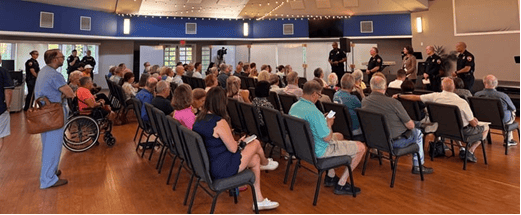
On Tuesday, the Police department hosted a community meeting for residents near Ederlee Drive and Regency Parkway following the recent fatal pedestrian crash at the Ederlee Drive crosswalk. Approximately 40 residents attended. Police and Transportation staff joined representatives from the North Carolina Department of Transportation (NCDOT) to gather feedback and address community concerns. NCDOT also shared information about its federally funded Pedestrian Hybrid Beacon project, which is under design, with construction anticipated to begin in 2028. In the meantime, staff is working with NCDOT on an interim solution to install a rectangular rapid-flashing beacon at the existing crosswalk. NCDOT has launched a project website with updates on the planned improvements.
East Chatham Street Improvements
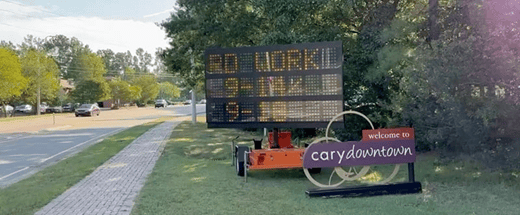
The 2026 Street Improvements Project, funded through transportation-restricted revenue, is more than 75% complete. Milling and resurfacing on East Chatham Street between Templeton Street and the East Durham Road roundabout is scheduled for Sept. 14-18. Flaggers will direct traffic, with two-way traffic maintained when feasible. Drivers should expect delays and uneven pavement during paving. Message boards are in place to provide advance notice of next week’s work, and businesses will be notified of construction and temporary parking restrictions.
NCWRF Driveway Improvements Complete
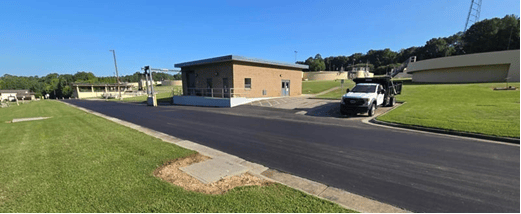
This week, crews completed asphalt paving at the North Cary Water Reclamation Facility (NCWRF), resurfacing the administration building’s rear parking lot and replacing the main interior roadways at full depth. The NCWRF experiences significant heavy truck traffic, with approximately 52 trucks traveling through the facility each week. These maintenance improvements enhance access and improve overall plant operations and functionality. The $241,797 project was funded through the Utility Fund.
Veolia National Pickleball Championships
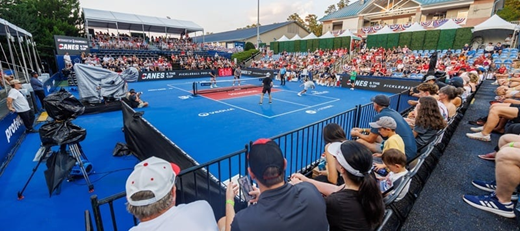
The Tennis Park hosted the Veolia Pickleball National Championships from Aug. 31 through Sept. 6. The tournament is one of the top-level events on the Professional Pickleball Association (PPA) Tour schedule and the highest-level event held in Cary. The world’s top-ranked players competed, and the Tennis Channel aired matches from the quarterfinals through Sunday’s finals. The event also included an amateur competition for players of all ages and skill levels, free concerts, and Carolina Hurricanes Night, which showcased the Stanley Cup and an exhibition match between the Hurricanes and PPA players.
Public Safety Day Recap
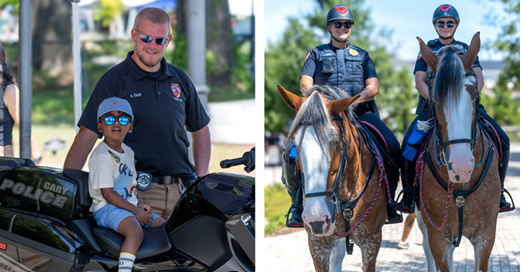
The Police department hosted Public Safety Day last Saturday, giving families an up-close look at the people, equipment, and partnerships supporting the community. Attendees met representatives from Cary Police and Fire, EMS, WakeMed, and other organizations. The event featured more than 30 emergency response vehicles, agency demonstrations, food trucks, interactive activities, live music, a morning show hosted by 96.1 BBB FM, and a friendly fitness competition between Police and Fire.
Important Dates
Parks, Recreation, and Cultural Resources Advisory Board
Monday, September 14, 5:15 p.m.
Council Committee
Monday, September 14, 5:15 p.m.
Information Services Advisory Board
Monday, September 14, 6:00 p.m.
Zoning Board of Adjustment
Monday, September 14, 6:30 p.m.
Town Council Quarterly Meeting
Tuesday, September 15, 1:00 p.m.
Town Council Special Called Meeting
Wednesday, September 16, 5:15 p.m.
Public Art Advisory Board
Wednesday, September 16, 6:15 p.m.
Greenway Committee
Thursday, September 17, 6:00 p.m.
Mayor’s Mailbox
- Several complaints and a petition about a potential sale of the properties at 600 and 604 Kildaire Farm Road that were bought without council approval for affordable housing. The requesters want to use these properties as open space. (These properties were not acquired through the property acquisition process and were reportedly purchased for affordable housing. If that was the intended purpose, the purchase should have been brought before the Council for deliberation, and the public should have had an opportunity to comment before the decision was made.
Although the future use of this land has not been discussed by the Council, every Council member except me has stated that affordable housing is their highest priority. In my opinion, if these properties are not sold, they will likely ultimately become affordable housing apartments, which IMHO is not the best use of this land in such a critical location downtown.
Ironically, using this land for parks or open space creates a similar problem: it bypasses the established process. There are already parks throughout the community with significant financial needs, and decisions about allocating public resources for additional open space or parkland should be considered alongside those existing priorities through an open and transparent process.)
- Several complaints about closing the convenience center: “Shame on you.” “You were asleep at the wheel.” “A decision with no public input.”
(In the 1950s, the Town built the convenience center within the railroad right-of-way. The railroad has now requested the property back, and we have been given until the end of this year to vacate the site.
We do have enough space at the current location to continue accepting yard and food waste. However, other materials will need to be taken to one of the county’s convenience centers, which are located within 15 minutes of virtually anywhere in Cary.
As a side note, Cary was the only municipality in Wake County operating its own convenience center; all the other municipalities rely on county facilities.
Building a new convenience center in Cary is estimated to cost more than $5 million, which would equate to approximately one penny on the tax rate. The Town Council voted, in a public meeting with public input, not to pursue a new facility, particularly given that county convenience centers are readily available to Cary residents.)
- A complaint about traffic on highway 54 at the SV temple.
- A complaint about development in Cary: “Cary is being overtaken by developers…. STOP destroying Cary!!! … ENOUGH over building. … There are homeless and panhandlers galore now. … the public cannot keep supporting a growing problem. …”
- A complaint about using the old library site for affordable housing.
- A request for November to be Veterans Month.
Next Week
Next week’s activities include staff meetings, a council subcommittee meeting, a GRCVB Board meeting, a council-staff quarterly meeting, Muffins with the Mayor, CAMPO, and an appearance as Frank Page. My next post will be on Sunday, September 20th, 2026. Please send all Town of Cary questions or comments to Harold.Weinbrecht@carync.gov. Note that all emails sent to me in my role as mayor are public documents.
Dashboard of Recommendations by Cherry Bekaert, OSA, and Womble Bond Dickinson
The latest updates on the Town’s actions in response to recommendations from Cherry Bekaert, the Office of the State Auditor (OSA), and Womble Bond Dickinson are available on the Town’s Moving Forward Dashboard. There are 39 recommendations in total. This link gives the progress on each of those recommendations:
https://www.carync.gov/connect-engage/newsroom/bottom-line/moving-forward-dashboard
You can also sign up to receive notifications whenever the dashboard is updated.
Council Initiated Items
The council has a process that allows members to introduce items for discussion at meetings, often leading to further action. Given the recent increase in these requests, I will begin sharing them here along with my perspective on their pros and cons.
Sell Properties at 600 and 604 Kildaire Farm Road
I submitted this item and Council member Bansal provided the second. It will be addressed at a future meeting.
The following is my reasoning:
“Good government depends on transparency, accountability, and responsible stewardship of taxpayer dollars. When significant real estate purchases are made despite staff recommendations against acquisition, or when information about those purchases was not fully communicated to the entire Town Council or the public, it raises legitimate questions about the decision-making process. Even if the purchases were made with good intentions, the appearance of limited transparency can undermine public confidence.
Selling the properties would accomplish several important objectives.
First, it would return public funds that could be redirected toward higher priority needs such as transportation improvements, parks, public safety, stormwater infrastructure, or reducing future tax and fee pressures. Every dollar tied up in property without a defined public purpose is a dollar unavailable for more immediate community priorities.
Second, selling the properties would demonstrate a commitment to fiscal responsibility. Holding them simply because they have already been purchased is not sound financial management. Decisions should be based on current public value, not past expenditures.
Third, a sale would reinforce the principle that major financial decisions deserve full transparency. Residents expect elected officials to have complete information before voting on expenditures involving public funds. If there are concerns that the full Council or the public did not receive sufficient information before these purchases, the appropriate response is to correct course openly rather than continue defending a questionable decision.
Finally, selling the properties would provide an opportunity to rebuild public trust. The Town could conduct a transparent process that includes an independent appraisal, public disclosure of the financial impacts of the purchase and sale, and an open discussion of alternative uses for the proceeds. Such a process would demonstrate that Cary is committed to accountability and evidence-based decision-making.
The question should not be whether the Town can justify a past decision, but whether continuing to own these properties represents the best use of taxpayer resources today. If the answer is no, which I believe it is, the responsible course of action is to sell them through an open and competitive process and reinvest the proceeds in priorities that provide clear, measurable benefits to the entire community.”
PROS:
- Frees up public funds.
- Demonstrates fiscal discipline.
- Reinforces transparency and accountability.
- Helps in restoring public confidence.
- Reduces carrying costs.
CONS:
- The town could lose future strategic opportunities.
- There is potential for financial loss.
- Loss of control over development.
- Missed appreciation.
- Selling could limit future flexibility.
Partnering with the school board to pilot school zone safety improvements
This proposal was submitted by Council Member Bansal, and I provided the second. It was brought up at the May 28th Council meeting.
Several schools in Cary, particularly middle schools and high schools, are experiencing transportation safety concerns on and around school property. While the schools are responsible for transportation operations on campus and NCDOT oversees roadway infrastructure decisions, progress on improvements has been slow and resident complaints have continued to increase. This proposal would direct staff to work collaboratively with the schools on programs and strategies to help address these concerns.
PROS:
- Allows the Town to take a more proactive role, even when we are not the primary decision-maker.
- Responds to growing community concerns regarding school transportation safety.
CONS:
- The Town is currently understaffed, so this effort could require shifting staff resources away from other projects.
- Potential solutions could result in additional costs to taxpayers if Cary contributes funding toward implementation.
E-Bike Safety
This proposal was submitted by Council Members Bansal and Richards and presented at the April 16th meeting. It was part of our June 23rd work session.
The council initially launched a pilot program in June 2022 to allow e-bikes. After a one-year trial period, the program was made permanent, with a posted speed limit of 15 mph on greenways. Recently, however, there have been complaints that e-bikes, scooters, and similar devices are traveling at excessive speeds and creating potentially hazardous conditions.
PROS:
- We are listening to our citizens’ complaints.
- Preventing e-bikes and scooters will possibly make greenways safer.
CONS:
- There is basically no way to enforce an ordinance that has e-bikes or not.
- Any enforcement effort would require additional officers and officers’ time. We are currently underfunding officers and require overtime to maintain existing levels of service.
- We are revisiting a decision that was made after a one-year trial and review of data.
Council will vote on a draft ordinance of this later this year.
Smoke Free Ordinance
This proposal was submitted by Mayor Pro-Tem Bush and Council Member Craig and presented at the April 16th meeting. It was part of our June 23rd work session.
PROS:
- Eliminates toxic secondhand smoke.
- Current ordinance does not match state law and Raleigh/Wake ordinance.
CONS:
- Any enforcement effort would require additional officers and officers’ time. We are currently underfunding officers and require overtime to maintain existing levels of service.
Council will vote on options to add to the current ordinance later this year.
Affordable Housing on Old Library Site
This proposal, submitted by Mayor Pro Tem Bush and Council Member Bansal, would place a podium-style parking deck with affordable housing on the former library site. This has yet to be scheduled for a meeting agenda.
PROS:
- Adds parking across from Downtown Cary Park.
- Create affordable housing units in the downtown area.
CONS:
- May underutilize one of the municipality’s most valuable properties. Downtown Cary Park generates approximately $16 million annually in economic impact, and this site could represent an opportunity for a more transformative use.
- The town has already invested millions in renovating the Ivey-Ellington House, positioning this area as a premier destination.
How Cary Government Works
Cary’s government, like most cities in North Carolina and most mid-sized cities in the U.S., uses a council–manager form of government. This system works a lot like a company, but for local government. Residents elect a council and a mayor, who set policy by passing laws, approving the budget, and guiding the town’s overall priorities. The council then hires a professional manager to run the town’s day-to-day operations.
Think of it like a company: the council acts like a board of directors, making policy and representing the public, while the city manager acts like a CEO, overseeing all departments, such as finance, public works, police, and fire, and managing town staff. The mayor leads council meetings, represents the town publicly, and has limited executive authority. While the council and mayor make policy decisions and receive regular reports, they usually see only high-level summaries rather than the detailed inner workings of each department.
In short, just as a board hires a CEO to run a company, Cary’s council hires a manager to run the town, ensuring professional management while elected officials focus on big-picture decisions and community priorities.
You can find additional information about how Cary’s government works on the town’s website here.
Purpose of this Blog
It is my hope that this blog will provide insight not only into who I am meeting with on behalf of the Town, but also the topics we discuss. I believe strongly in open and transparent government. This blog is one of several initiatives I implemented when I became mayor in 2007 to make the governmental process more accessible to our citizens.
This blog is written with sincerity, honesty, and a commitment to accuracy so our constituents can better understand the work we do. After all, we work for them!

