
Legislature Targets Cary, Raleigh, and Charlotte’s Rezoning Authority
On August 11th legislation was passed, signed by the Governor, and supported by members of the Wake County delegation that would allow residential including multi-family units by right in redevelopment of properties without any council approval. These properties can be up to 60 feet high or higher in any commercial, business, or light industrial zoning. So old office buildings in Weston and Regency can now be turned into high rise apartment buildings without any council approval. As a result of previous legislation, these buildings would not have any parking requirements, or any transportation requirements.
It should be noted that this applies only to Cary, Raleigh, and Charlotte which happen to be all Democrat councils except for Charlotte which has one Republican.
Council asked staff to find all properties that would fall into this category.
Good luck to those folks who live near office parks are shopping centers. If you are as upset about this as many are, I would encourage you to contact the decision makers at the legislature.
Recommendations Committee Meeting
On Monday evening, the Council subcommittee tasked with developing policy recommendations based on the findings of the State Auditor and the firms Womble Bond Dickinson and Cherry Bekaert met for the second time.
The committee’s first action was to formally name itself the “Recommendations Committee.” Below are the notes I made during the meeting:
Travel, Training, and Meals:
- The Council is not permitted to accept a gift, which is defined as something provided by an entity that has a contract with the Town.
- The committee will consider developing a preapproved list of allowable travel and training expenses. Anything outside that list would require Council approval.
Compensation:
- The committee discussed the possibility of establishing a citizen committee to review compensation.
- Any changes would take effect at the beginning of the next budget year.
- Continuing fees or allowances in addition to salary did not appear to be favored by the committee.
- Current total compensation appears to be in line with that of municipalities both larger and smaller than Cary in population.
Benefits:
- Six of the seven most populous municipalities in North Carolina provide health coverage for elected officials.
- For the most part, Cary Council members receive the same health coverage as staff, although staff members have more options.
- Council members receive premiums at a lower rate equivalent to the rate available to staff who participate in the wellness program. Council members, however, cannot participate in the wellness program because they are not full-time employees.
Committee Process:
- The committee agreed that, to work efficiently, it should first “take a pulse” of the full Council regarding potential policy recommendations before conducting a deeper dive into individual issues.
- The committee agreed that its primary role is to vet the issues for Council and develop potential policy recommendations.
Homework:
- Harold: Meet with HR to identify all differences between staff and Council health benefits.
- Carissa: Conduct a deeper review of technology benefits.
- Brittany: Incorporate feedback from Harold and Carissa.
Council Spending
During the meeting, the Clerk also reported on Council spending during the previous 60 days. Two tickets, at a cost of $275 each, were purchased for two Council members to attend the NC Affordable Housing Conference.
WRAL Continues False Narrative of Cary
Unfortunately, WRAL continues to promote what I believe is a misleading narrative about Cary’s finances, suggesting that the town has financial problems, is plagued by excessive spending, that the Town Council is responsible, and that council members are somehow uninformed about the town’s financial position.
This week’s headline about the Recommendations Committee meeting is another example of that narrative:
“New ideas for solving Cary’s financial problems discussed at Monday committee meeting”
That characterization is misleading. The committee was meeting to address recommendations from the State Auditor, Womble Bond Dickinson, and Cherry Bekaert. It was not meeting to determine how to “fix” a financial problem. Cary’s financial position is strong, as has been independently verified by bond-rating agencies and auditors. Cary is among the financially strongest municipalities in North Carolina, if not the country. Framing a required review and response to these recommendations as an effort to solve a “financial problem” creates a false impression about both the town’s financial health and the Council’s understanding of its finances. WRAL’s headline is a narrative that is not supported by Cary’s actual financial condition.
CBS 17 also reported on the committee meeting, stating:
“The Town of Cary has formed a recommendation committee to restore and strengthen policy after a state audit revealed the town had a culture of excessive spending. Monday evening, the committee discussed council member compensation and allowances, bringing in research from what neighboring towns do.”
While this characterization is more accurate, the use of the word “excessive” can imply that inappropriate or unjustified spending was widespread throughout the town. That implication, particularly when combined with the state auditor’s repeated reference to approximately $24 million in P-Card spending, can create a misleading impression about the scope and nature of the findings.
The $24 million figure represents total P-Card spending, not $24 million in improper or excessive expenditures. Much of that spending was legitimate and related to normal town operations. The distinction is important because presenting the total spending figure without sufficient context can lead readers to conclude that the audit identified $24 million in questionable spending, which it did not.
Based on what I know today, the findings identified to date do not appear to be of magnitude that would affect Cary’s tax rate. That is an important piece of context that should be included when characterizing the audit and its implications for Cary’s finances.
The town can, and should, take the audit findings seriously, strengthen policies where appropriate, and address any identified deficiencies. But doing so is fundamentally different from suggesting that Cary has a broad financial problem or a town-wide culture of excessive spending. Those distinctions matter, particularly when reporting on the town’s overall financial health.
ABC11, which has probably been the most accurate of the three major local news outlets in its coverage of this issue, apparently did not cover this meeting.
Perhaps they recognized what the meeting actually was: a subcommittee working through recommendations from the various reviews and audits. And that IS exactly what it was.
Water Main Break
Cary experienced a major water main break shortly after midnight Monday. The break occurred on a 30-inch transmission main, approximately 33 years old.
Staff quickly noticed that the water tanks were losing water at a rapid rate. Although water pressure was lost in parts of the system, this was not a “do not drink” situation. Staff worked throughout the night to make repairs, and water pressure was restored by the morning rush hour.
The following update was provided to Council by the Utilities Director at approximately 5 a.m. Tuesday:
“I’m glad to share that the water system advisory affecting approximately 50,000 people has been lifted.
What started with a water main break quickly turned into a much larger response. Our teams worked through the repair, water pressure issues, flushing the system, and finally the bacteriological testing we needed before the advisory could be lifted. We received those results around 4 a.m. today, and everything came back as we hoped and confirm water is safe for normal use.
Thank you to our crews and staff who worked long hours in the field to get the system back to normal, as well as the crew that remains on-site to reopen 55. I also want to thank our EOC team for coordinating the response and our communications team for keeping everyone informed along the way.
This was a big disruption for our community and for many of you personally. I appreciate how everyone responded and worked together to get us back to normal operations.”
Staff did an incredible job responding to what could have been a much larger problem and getting the system back to normal as quickly as they did.
The primary negative feedback was concerning communications. Some residents reported that they did not receive information about the situation, even though updates were distributed through television, print news, social media, and email.
Staff will review the response and look for ways to improve communication during future emergencies. In the meantime, residents are encouraged to sign up for ReadyWake alerts, which provide emergency notifications directly to subscribers. You can sign up for ReadyWake alerts which you can sign up for at https://readywake.com/readywake-alerts/.
There were also questions about the details of the incident. Here is the utility director’s response to those questions:
“…
Thanks for your message. I’ll do my best to answer your questions and provide some additional context regarding the recent water main break.
First, I’m truly sorry for the inconvenience this main break caused our customers, businesses, and citizens throughout our utility service area. This was an especially unusual and challenging water main break, and I can understand why it raised so many questions. I’ve spoken publicly about the water main break and our response at the Cary Town Council, Quarterly Meeting earlier this week. You can view it here. The briefing is at the beginning of the meeting.
- Specific Cause – The forensic analysis of the pipe failure is still underway, so we don’t have a definitive determination of the cause just yet. Our initial assessment is that a combination of corrosion and system dynamics associated with air entering and existing the pipeline may have caused the failure. We are continuing to investigate these factors before reaching a final conclusion.
Importantly, the water system as a whole was operating normally and well within its established operating parameters at the time of the main break.
- Age, Material, and Condition – After a more thorough review of record drawings, the main break occurred at a 30-inch diameter ductile iron pipe transmission main that was installed in 2001, which is actually newer than I originally thought. The pipe is therefore 25 years old.
Ductile-Iron-Pipe is our most resilient material of construction within water systems, and this particular pipe has a design life of at least 50-years. As part of the repair, staff inspected the remaining pipe on both sides of the failure, and those sections were found to be in excellent condition.
- Overall Condition of Cary’s Water System – Cary’s water system in generally in good to excellent condition. We have maintained a Ductile Iron Pipe standard for water mains for decades. We also perform water main replacements each year to replace aging pipes within the water distribution system. Cary maintains more than 1,100 miles of water mains, and we invest approximately $4 million to $5 million annually for water main replacements, and that doesn’t include the additional funding we provide for routine water system repairs. Our maintenance and replacement programs are intended to address aging infrastructure proactively rather than waiting for failures to occur.
- Maintenance, Repair and Replacement – Cary conducts full-scale water main replacements every fiscal year, in addition to responding to individual main breaks and performing routine maintenance.
We review repair history annually and use that information to identify mains that may warrant complete replacement. In making those decisions, we consider factors such as repair history, age, material, and other available information about the condition and performance of the pipeline. This strategy of repair and replacement has served Cary well.
- Planning for Replacement and Repair – We recognize that maintaining a safe and reliable water system requires continuous planning and investment, and we continually strive for ways to improve our programs. Our long-term planning is guided by Cary’s Water Distribution Master Plan, along with our Standard Specifications and Engineering Practices. Once infrastructure is in service, staff closely monitor its performance and repair history. We always strive for complete replacement when needed based on repair history, age of pipeline, and materials of construction as opposed to making repeated repairs.
Water Main Replacement is an ongoing program that is funded each year as part of Cary’s capital improvement program.
- Prioritization and Identifying Potential Failures – Water main replacement priorities are generally based on repair history, age, material, and the observed performance and condition of the infrastructure. This approach allows us to focus available resources on mains where replacement can provide the greatest reliability benefit.
As with any large infrastructure system, it is not possible to predict every individual failure. Some failures occur in infrastructure that otherwise appears to be performing normally, which is one reason why ongoing monitoring, maintenance, and system planning are so very important.
- Isolated Incident or Broader Concern – Cary operates a large and complex water distribution system with more than 1,100 miles of pipelines, and some isolated water main breaks are unavoidable in a system of this size. Cary’s water main break experience has generally been very good relative to comparable systems, and in my 27 years of experience with Cary, I have not experienced a water main break requiring a response quite like this one. I would consider this a very unusual and rare occurrence.
At the same time, we take this main break very seriously. Although the break itself created significant challenges, we were able to isolate the affected portion of the system and generally restore water pressure within approximately two to three hours.
- Additional Steps – We are working closely with our engineering staff and the engineering community to better understand the failure and the conditions that contributed to it. Once the investigation is complete, we will evaluate whether any changes to our inspection, maintenance, design, operating, and replacement practices are warranted.
Our goal is not simply to repair the pipe that failed, but to learn from the incident and implement practical and reasonable measures that can reduce the likelihood of a similar event in the future.
I sincerely hope this information helps to address your concerns. We take our responsibility for maintaining a safe and reliable water system very seriously and we appreciate your taking the time to ask these questions.
Please don’t hesitate to reach out to me directly if you would like to discuss further at (919) 469-4303.
…”
If you want to see the council discussion of this matter, especially communications, you can find it at https://www.youtube.com/watch?v=mahdtxRmhpk&t=19s around the 26:50 mark.
Council-Staff Quarterly Meeting
The Cary Council and staff held its third quarterly meeting of the year on Tuesday. These are half-day meetings designed to cover multiple topics. Topics covered in this meeting included a briefing on the water-main break, a financial update, a work plan prioritization, and a legislative update. The following are notes from each section:
Water Main Break
- Break on a 30-inch main
- Water tanks emptied in less than an hour creating low pressure
- It was not a situation of “do not drink the water”
- Water pressure was reestablished before morning rush
- Staff worked on repairs throughout the night
- The pipe was estimated to be 33 years old. It had a expected life span of 50 to 100 years.
- Only have of our ISAB board knew about the break.
- Everyone should sign up for ReadyWake alerts
- Maybe Wake County should require ReadyWake alerts for commercial and business
Financial Update (Staff)
- Unaudited year-end results show strong financial position.
- Revenue performance is favorable, but we should remain disciplined about the future.
- We are preserving capacity (Fund Balance) for Cary’s future (Capital/Unforeseen).
- Current projections remain in compliance with Cary’s fund balance policy.
- Projected to add approximately $13M to fund balance as of June 30, 2026.
- Projected fund balance supports financial stability, future capital needs, and flexibility for unforeseen or one-time expenditures.
Financial Update (Davenport and Company)
- Cary’s is strong financially
- Ratings:
- Ratings are a forward-looking opinion of the relative risk of financial obligations.
- Security is rated ‘through the economic cycle’ or through a long-term focus.
- Ratings are assigned to specific securities (General Obligation Bonds, Limited Obligation Bonds, Water & Sewer Revenue Bonds, etc.).
- The rating reflects the expectation of a default/nonpayment, a concept that incorporates both default probability and the likely financial recovery after default.
- There are three major rating agencies: Moody’s Investors Service, Standard & Poor’s Global Ratings, Fitch Ratings
- Cary’s Ratings are top tier from all rating agencies – “highest possible rating”
- Drivers to Governmental Credit Ratings
- Economic Base – Foundation of an Entity’s Fiscal Health
- Financial Performance and Flexibility
- Debt Factors
- Management Factors
- Cary’s Credit Strengths According to rating agencies
- Strong and growing local economy
- Strong financial policies and practices
- History of strong budgetary performances
- Manageable debt profile with some additional debt plans
- Large, dynamic tax base with strong economic growth
- History of stable financials supported by strong management
- Manageable leverage
- Strong demographic- and economic-level trend metrics, reflective of the fast-growing and wealthy resource base
- Very Low Long-Term Liability Burden
- Factors for Potential Downgrade
- The rating could be lower if Cary experiences financial pressures that lead to budgetary imbalance or if the town is unable to restore reserves to a level in line with near-term expectations
- Increase in long-term liabilities exceeding 350% of revenue
- Sustained trend of structural imbalance leading to significantly narrowed reserves, below 35% of revenue
- A sustained decrease in general fund balances
- Diminished demographic trends and economic levels, including population growth, unemployment relative to the national average, and median household income as a percentage of Fitch’s portfolio
- Cary compares favorably with other municipalities in fund balance
Work Plan Prioritization
Council did a green dot – red dot exercise. Green meaning we should prioritize soon and red meaning we can put that off until later. Here are some of the results:
- Senior Center Expansion: 3 green
- Consider of a Stormwater Utility fee: 3 green
- Multi-Model Master Planning: 3 green
- Revenue Discussion: 2 green
- Historic Preservation Master Planning Update: 2 green
- Service Levels- compost, leaf pick-up, medians, etc.: 2 green
- Debt Planning: 2 green
- Public Safety Operations: 2 green
- Public Safety Capital: 2 green
- Class and Pay Study: 2 green
- Prioritize Economic Development on Capital Projects related to sports venues (like WakeMed Improvements, tennis center improvements, etc.): 1 green
- Renovate Cary Arts Center: 1 green
- Update on Cricket: 1 green
- South Hills Municipal District: 1 green
- Healthy Homes Cary Guidelines Update: 1 green
- McCrimmon and Green Level West roadway improvements: 1 green
- Transportation System Requirements Follow-up: 1 green
- Action Sports/Mountain Bike + partnership with Triangle off-road cyclist: 1 green
- Transit/GoCary Service and BRT Updates: 1 green
- Utility Billing Project: 1 green
- Capital Projects/Infrastructure Update: 1 green
- Mission, Vision, and Values: 1 green
- E-bike ordinance amendment: 1 green and 1 red
- Other Post employment benefits: 1 green and 1 red
- New Community Center: 1 green and 1 red
- AI & Data Update: 1 red
- World University Games: 1 red
- Weston Special Planning Area and Regency Park: 1 red
- Downtown Mobility Study: 1 red
- NCDOT Trinity Road Bridge: 1 red
- NCDOT Maynard Road Bridge: 1 red
- Board of Elections early voting: 1 red
- Downtown Cary Park Budget Review: 1 green and 3 red
- Downtown building height: 2 red
- Lighting Standards: 1 green and 2 red
- Events and festivals programming: 2 red
- Ruritan Land Swap: 2 red
- Election signs: 2 red
- Old Library Site Options: 2 red
- 2028 July 4th Done or Firework display: 2 red
- Add employee salary data on Open Data Portal: 3 red
- Meeting with external jurisdictions: 4 red
- Painting the water town and adding Cary logo: 5 red
(There were many more priorities that did not receive dots)
Legislative Update
- Local authority continues to be restricted and supplanted in land use and other spheres
- Local government litigation exposure is increased
- Ordinance amendments in development to implement necessary changes
- Eliminated minority- or women-owned participation goals in construction procurement. There will be increased emphasis on “small business enterprises”
- Disbursements over $25,000 must be reported to the State Auditor
- Reports forward to the Local Government Commission and the Joint Legislative Commission on Governmental Operations
- $1,750 bonus to every sworn local law enforcement officer
(as of June 30, 2026). This will be paid by the State, not from Town funds - Changes state definition of e-bike. Permits local governments regulation of e-bike classes and speeds on multi-use paths and sidewalks
- Requires public hearing if “outside” utility rates exceed inside rates by 25%. Water and sewer contracts may be awarded on as few as two bids
- May not prohibit or require a permit for home-based businesses. Activity stays inside or in the yard and is not visible from the street; no on-street parking generated; no outside storage
Muffins with the Mayor
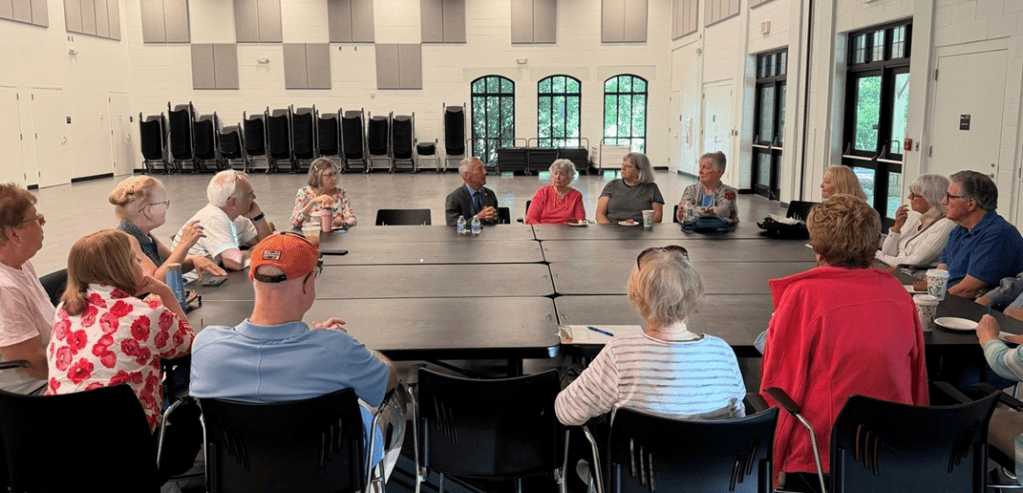
On Wednesday, I had the pleasure of joining nearly twenty seniors at the Senior Center for “Muffins with the Mayor.” This forum provides residents with an opportunity to share their thoughts, ask questions, and talk about anything that is important to them.
We had a wonderful and engaging conversation about town operations, property values, taxes, and many other topics. I thoroughly enjoyed spending time with everyone, and based on the feedback I received, the feeling was mutual.
One attendee shared this afterward:
“Thank you for arranging Muffins with the Mayor the other day. It was time well spent, and the Mayor seems like an honest, caring individual.”
I truly appreciate the opportunity to listen, learn, and connect with residents. We have more “Muffins with the Mayor” events scheduled, including one on Wednesday, October 21st, at The Hive. I look forward to continuing these conversations with our community!
CAMPO
Wednesday, I attended a meeting of the CAMPO (Capital Area Metropolitan Planning Organization) Executive Board. The agenda included eight consent items, two public hearings, and one discussion item.
The first public hearing was to adopt locally preferred alternatives for Wake BRT’s (Bus Rapid Transit) Western Corridor and the Southern Corridor Extension. This was passed unanimously. The second public hearing was to adopt locally preferred alternatives for Wake BRT’s northern corridors including the Triangle Town Center and Midtown. This was passed unanimously.
The discussion item was the North Falls Lake area study report which was unanimously endorsed.
After the regular agenda the board went into closed session.
Frank Page Appearance
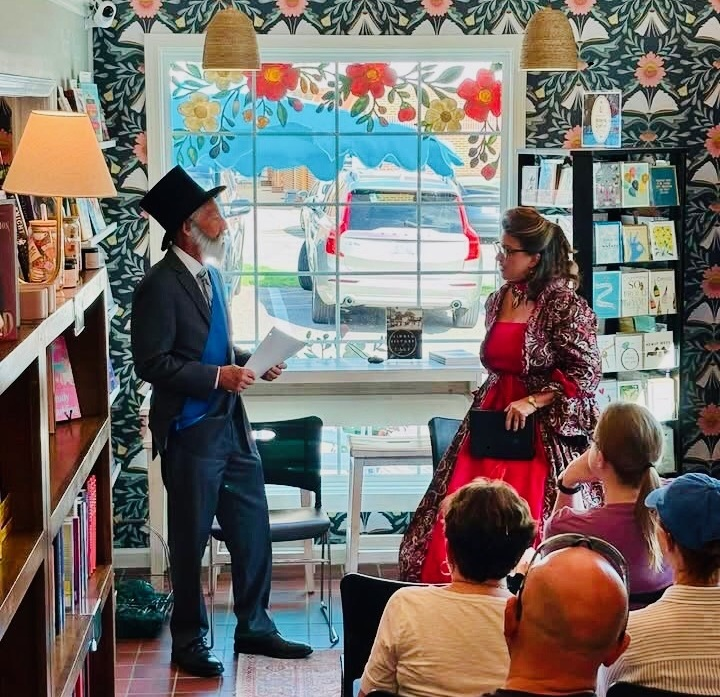
On Saturday, I had the pleasure of participating in the Grand Opening of Juliet Books and Beautiful Things. Dr. Katherine Loflin was there for a signing of her new book, and rather than simply reading a passage, I had the opportunity to join her in a skit, portraying Frank Page as she shared some of Cary’s history.
I’ve had the joy of working with Dr. Loflin on several occasions, portraying Frank Page, and it is always a pleasure to bring local history to life with her. We had a wonderful time sharing a bit of Cary’s history with the audience of about a dozen people. It was a fun and memorable way to celebrate the opening of such a wonderful new local business!
Town Manager’s Report
Council,
This week began with a significant water main break and system pressure advisory that required a tremendous response from staff across the organization. I’m incredibly grateful for everyone who worked to make repairs, restore system pressure, and keep our community informed throughout the process. Seeing everyone come together so quickly and thoughtfully made me especially proud to be part of this team.
It was wonderful seeing all of you throughout the week, and I especially enjoyed digging into the finance and legislative updates at Tuesday’s Quarterly. These are complex topics that directly impact Cary, and your thoughtful questions and conversations help us consider what lies ahead and position Cary for continued success. Working toward prioritizing our time together was very productive, and we look forward to talking more about that. Yesterday’s Triangle Community Coalition Coffee Chat offered another great opportunity to join you in conversation with TCC members about Cary’s growth and development. I am grateful for the many ways we continue to engage with one another and our community.
Wishing you all a wonderful weekend!
Dana Widmar
Assistant Town Manager
Moving Forward Dashboard Updates
Cary has updated its Moving Forward Dashboard to reflect progress through this week, changing the status of one recommendation to Complete (WBD 08) and two recommendations to Research (WBD 10 and WBD 12).
Triangle Community Coalition Coffee Chat
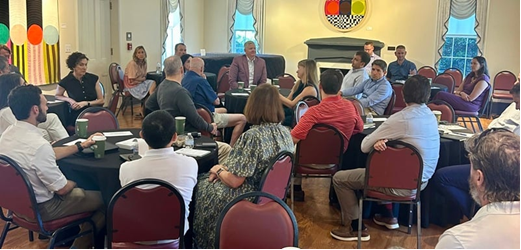
On Thursday, Cary hosted the annual Triangle Community Coalition (TCC) Coffee Chat. The group discussed potential impacts of recent state legislation, regional market trends, and the shift to infill and redevelopment. TCC meetings offer a valuable opportunity for direct dialogue between the development community, staff, and elected officials around the processes and policies that guide development in Cary.
Black Creek Greenway Renovation Update
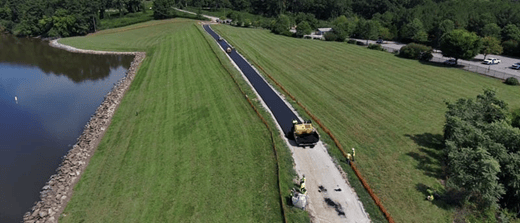
Paving operations are underway on the third and final phase of the Black Creek Greenway renovation from Weston Parkway to the Old Reedy Creek Road trailhead. The project is ahead of schedule, with paving expected to be completed later this month, weather permitting, and the greenway anticipated to reopen this fall. The $17.2 million project is supported by $12.1 million in grant funding and features wider trails, along with drainage and accessibility upgrades.
Carolina Circus Festival Recap

Downtown Cary Park hosted the Carolina Circus Festival last Saturday, drawing approximately 4,500 attendees. Six performing groups showcased aerial and ground acrobatics, while interactive workshops invited visitors to try hula hooping and partner acrobatics. Local spinners and dancers closed the evening with an LED and fire show. Presented in partnership with the Carolina Circus Festival, a nonprofit that promotes mental health awareness and suicide prevention, the event celebrated creativity, movement, and community.
Beyond: The Cary Film Festival Recap
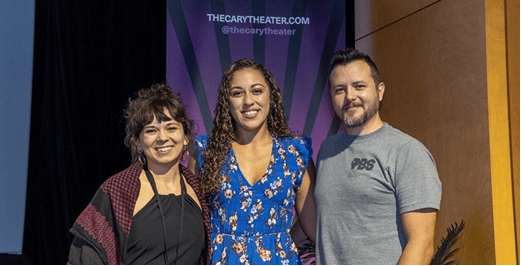
BEYOND: The Cary Film Festival brought more than 1,000 attendees to The Cary Theater Sept. 10-13. Attendees watched 25 short films, voted for their favorites, learned about the film industry, and connected with residents, movie lovers, and fellow filmmakers. The festival concluded with an awards ceremony at The Mayton. Five awards recognized the short films Jasmine. Home. Mother., The Boys and the Bees, Sincerely, Sage Jo, Not Much Has Changed and Oh, Happy Day!, and the sixth went to screenplay winner Dream Meanings.
Virtual Neighborhood Rezoning Meeting: October 7
The following neighborhood meetings will be held on Wednesday, Oct. 7, at 6:30 p.m.
For more information and to register, please visit the Virtual Neighborhood Rezoning Meeting page.
Important Dates
Council Recommendations Committee
Monday, September 21
5:15 p.m.
Town Council Work Session
Tuesday, September 22
5:30 p.m.
Cultural Arts Committee
Wednesday, September 23
6:00 p.m.
Town Council Meeting
Thursday, September 24
6:30 p.m.
Mayor’s Mailbox
- Several complaints and a petition about a potential sale of the properties at 600 and 604 Kildaire Farm Road that were bought without council approval for affordable housing. The requesters want to use these properties as open space. (These properties were not acquired through the property acquisition process and were reportedly purchased for affordable housing. If that was the intended purpose, the purchase should have been brought before the Council for deliberation, and the public should have had an opportunity to comment before the decision was made.
Although the future use of this land has not been discussed by the Council, every Council member except me has stated that affordable housing is their highest priority. In my opinion, if these properties are not sold, they will likely ultimately become affordable housing apartments, which IMHO is not the best use of this land in such a critical location downtown.
Ironically, using this land for parks or open space creates a similar problem: it bypasses the established process. There are already parks throughout the community with significant financial needs, and decisions about allocating public resources for additional open space or parkland should be considered alongside those existing priorities through an open and transparent process.)
- Several complaints about closing the convenience center (In the 1950s, the Town built the convenience center within the railroad right-of-way. The railroad has now requested the property back, and we have been given until the end of this year to vacate the site.
We do have enough space at the current location to continue accepting yard and food waste. However, other materials will need to be taken to one of the county’s convenience centers, which are located within 15 minutes of virtually anywhere in Cary.
As a side note, Cary was the only municipality in Wake County operating its own convenience center; all the other municipalities rely on county facilities.
Building a new convenience center in Cary is estimated to cost more than $5 million, which would equate to approximately one penny on the tax rate. The Town Council voted, in a public meeting with public input, not to pursue a new facility, particularly given that county convenience centers are readily available to Cary residents.)
- Complaints about the water-main break communications: “do better or step down”, “the public deserves safety from our leaders”, “I think you should know and do better” (While I am not involved in town operations or decisions related to water main breaks, we have directed staff to look into better ways of communicating in situations like this)
- Comments about the water-main break communications: “residents have to take some responsibility for staying informed”.
- Compliments for fixing the water-main break quickly: “It’s remarkable to me that you were able to repair something like that so quickly and communicate about it so effectively”.
- A request to get involved in an immigration issue (unfortunately this is a federal issue and I have no authority).
- A thank you for the tribute I gave to former council member Ed Yerha.
- An idea for Wake County EMS (as the title suggests this is authority under Wake County and not Cary)
- A request to help make the east-west greenway connector.
- A complaint that GoCary is a failure and a waste of money.
Next Week
Next week’s activities include staff meetings, a meeting with a delegation from Fayette County, Georgia, a Recommendations Committee meeting, a Wake County Mayors Association meeting, a meeting with a local pastor, a council work session, and a council meeting.
My next post will be on Sunday, September 27th, 2026. Please send all Town of Cary questions or comments to Harold.Weinbrecht@carync.gov. Note that all emails sent to me in my role as mayor are public documents.
Dashboard of Recommendations by Cherry Bekaert, OSA, and Womble Bond Dickinson
The latest updates on the Town’s actions in response to recommendations from Cherry Bekaert, the Office of the State Auditor (OSA), and Womble Bond Dickinson are available on the Town’s Moving Forward Dashboard. There are 39 recommendations in total. This link gives the progress on each of those recommendations:
https://www.carync.gov/connect-engage/newsroom/bottom-line/moving-forward-dashboard
You can also sign up to receive notifications whenever the dashboard is updated.
Council Initiated Items
The council has a process that allows members to introduce items for discussion at meetings, often leading to further action. Given the recent increase in these requests, I will begin sharing them here along with my perspective on their pros and cons.
Creating a Permanent Transportation and Mobility Committee of Citizens
This proposal will be submitted by Mayor Pro-Tem Bush and Council Member Huong. The request is that council ask staff to evaluate and return recommendations for transitioning the current Transportation Working Group into a permanent, formal citizen advisory committee known as the Transportation and Mobility Committee.
The Transportation Working Group was established in 2020 and began meeting in 2021.Since that time, it has served as an ongoing forum for resident and staff discussion of transportation and mobility issues, including bicycle and pedestrian safety, sidewalks, transit, greenways, bicycle infrastructure, e-bikes, the Triangle Bikeway, BRT, park master plans, and other transportation initiatives.
PROS:
- Could provide a consistent group of residents who follow transportation issues over multiple years rather than starting over with each project or initiative.
- Gives Council a dedicated transportation sounding board
- Provides a formal channel for citizen expertise
CONS:
- Requires more resources from a staff that is currently overwhelmed
- It could create expectations that Council cannot meet
- Risk of becoming dominated by a narrow set of interests
- Possible duplication of existing efforts
Sell Properties at 600 and 604 Kildaire Farm Road
I submitted this item and Council member Bansal provided the second. It will be addressed at the September24th meeting.
The following is my reasoning:
“Good government depends on transparency, accountability, and responsible stewardship of taxpayer dollars. When significant real estate purchases are made despite staff recommendations against acquisition, or when information about those purchases was not fully communicated to the entire Town Council or the public, it raises legitimate questions about the decision-making process. Even if the purchases were made with good intentions, the appearance of limited transparency can undermine public confidence.
Selling the properties would accomplish several important objectives.
First, it would return public funds that could be redirected toward higher priority needs such as transportation improvements, parks, public safety, stormwater infrastructure, or reducing future tax and fee pressures. Every dollar tied up in property without a defined public purpose is a dollar unavailable for more immediate community priorities.
Second, selling the properties would demonstrate a commitment to fiscal responsibility. Holding them simply because they have already been purchased is not sound financial management. Decisions should be based on current public value, not past expenditures.
Third, a sale would reinforce the principle that major financial decisions deserve full transparency. Residents expect elected officials to have complete information before voting on expenditures involving public funds. If there are concerns that the full Council or the public did not receive sufficient information before these purchases, the appropriate response is to correct course openly rather than continue defending a questionable decision.
Finally, selling the properties would provide an opportunity to rebuild public trust. The Town could conduct a transparent process that includes an independent appraisal, public disclosure of the financial impacts of the purchase and sale, and an open discussion of alternative uses for the proceeds. Such a process would demonstrate that Cary is committed to accountability and evidence-based decision-making.
The question should not be whether the Town can justify a past decision, but whether continuing to own these properties represents the best use of taxpayer resources today. If the answer is no, which I believe it is, the responsible course of action is to sell them through an open and competitive process and reinvest the proceeds in priorities that provide clear, measurable benefits to the entire community.”
PROS:
- Frees up public funds.
- Demonstrates fiscal discipline.
- Reinforces transparency and accountability.
- Helps in restoring public confidence.
- Reduces carrying costs.
CONS:
- The town could lose future strategic opportunities.
- There is potential for financial loss.
- Loss of control over development.
- Missed appreciation.
- Selling could limit future flexibility.
Partnering with the school board to pilot school zone safety improvements
This proposal was submitted by Council Member Bansal, and I provided the second. It was brought up at the May 28th Council meeting.
Several schools in Cary, particularly middle schools and high schools, are experiencing transportation safety concerns on and around school property. While the schools are responsible for transportation operations on campus and NCDOT oversees roadway infrastructure decisions, progress on improvements has been slow and resident complaints have continued to increase. This proposal would direct staff to work collaboratively with the schools on programs and strategies to help address these concerns.
PROS:
- Allows the Town to take a more proactive role, even when we are not the primary decision-maker.
- Responds to growing community concerns regarding school transportation safety.
CONS:
- The Town is currently understaffed, so this effort could require shifting staff resources away from other projects.
- Potential solutions could result in additional costs to taxpayers if Cary contributes funding toward implementation.
E-Bike Safety
This proposal was submitted by Council Members Bansal and Richards and presented at the April 16th meeting. It was part of our June 23rd work session.
The council initially launched a pilot program in June 2022 to allow e-bikes. After a one-year trial period, the program was made permanent, with a posted speed limit of 15 mph on greenways. Recently, however, there have been complaints that e-bikes, scooters, and similar devices are traveling at excessive speeds and creating potentially hazardous conditions.
PROS:
- We are listening to our citizens’ complaints.
- Preventing e-bikes and scooters will possibly make greenways safer.
CONS:
- There is basically no way to enforce an ordinance that has e-bikes or not.
- Any enforcement effort would require additional officers and officers’ time. We are currently underfunding officers and require overtime to maintain existing levels of service.
- We are revisiting a decision that was made after a one-year trial and review of data.
Council will vote on a draft ordinance of this later this year.
Smoke Free Ordinance
This proposal was submitted by Mayor Pro-Tem Bush and Council Member Craig and presented at the April 16th meeting. It was part of our June 23rd work session.
PROS:
- Eliminates toxic secondhand smoke.
- Current ordinance does not match state law and Raleigh/Wake ordinance.
CONS:
- Any enforcement effort would require additional officers and officers’ time. We are currently underfunding officers and require overtime to maintain existing levels of service.
Council will vote on options to add to the current ordinance at the September 24th meeting.
Affordable Housing on Old Library Site
This proposal, submitted by Mayor Pro Tem Bush and Council Member Bansal, would place a podium-style parking deck with affordable housing on the former library site. This has yet to be scheduled for a meeting agenda.
PROS:
- Adds parking across from Downtown Cary Park.
- Create affordable housing units in the downtown area.
CONS:
- May underutilize one of the municipality’s most valuable properties. Downtown Cary Park generates approximately $16 million annually in economic impact, and this site could represent an opportunity for a more transformative use.
- The town has already invested millions in renovating the Ivey-Ellington House, positioning this area as a premier destination.
How Cary Government Works
Cary’s government, like most cities in North Carolina and most mid-sized cities in the U.S., uses a council–manager form of government. This system works a lot like a company, but for local government. Residents elect a council and a mayor, who set policy by passing laws, approving the budget, and guiding the town’s overall priorities. The council then hires a professional manager to run the town’s day-to-day operations.
Think of it like a company: the council acts like a board of directors, making policy and representing the public, while the city manager acts like a CEO, overseeing all departments, such as finance, public works, police, and fire, and managing town staff. The mayor leads council meetings, represents the town publicly, and has limited executive authority. While the council and mayor make policy decisions and receive regular reports, they usually see only high-level summaries rather than the detailed inner workings of each department.
In short, just as a board hires a CEO to run a company, Cary’s council hires a manager to run the town, ensuring professional management while elected officials focus on big-picture decisions and community priorities.
You can find additional information about how Cary’s government works on the town’s website here.
Purpose of this Blog
It is my hope that this blog will provide insight not only into who I am meeting with on behalf of the Town, but also the topics we discuss. I believe strongly in open and transparent government. This blog is one of several initiatives I implemented when I became mayor in 2007 to make the governmental process more accessible to our citizens.
This blog is written with sincerity, honesty, and a commitment to accuracy so our constituents can better understand the work we do. After all, we work for them!

